Master's Mix Tek: High-Yield Substrate Guide
Everything you need to know about Master's Mix Tek: High-Yield Substrate Guide — from materials to first harvest.

What You'll Need
- See full supply list in guide below.
Find grow supplies at vendors in our Directory.
Step-by-Step Process
Master's Mix Tek: High-Yield Substrate Guide
Master's Mix is one of the most productive bulk substrates for Psilocybe cubensis — capable of significantly higher yields per pound of dry substrate than coco coir or manure-based mixes. The trade-off: it requires proper sterilization (not just pasteurization), and its nutritional density makes it more susceptible to contamination than less nutrient-rich substrates.
What Is Master's Mix?
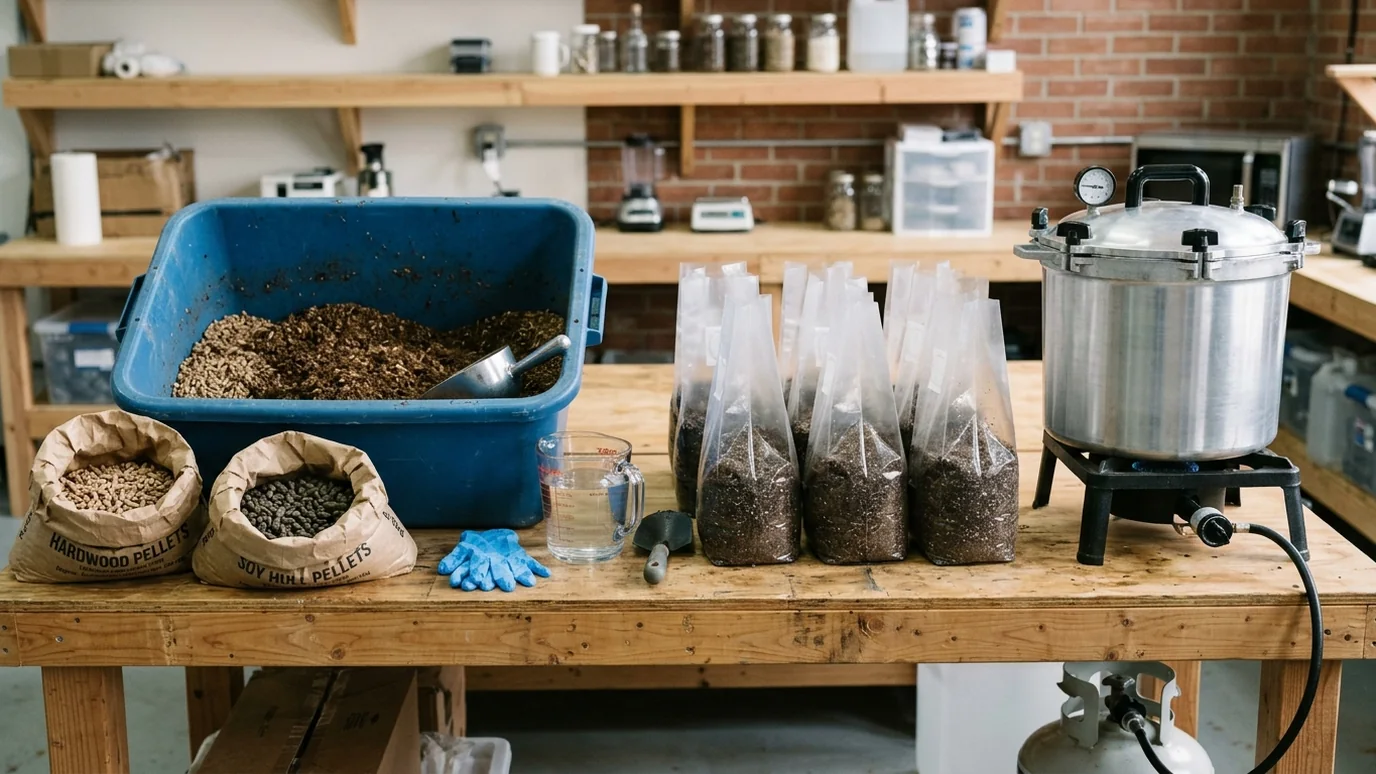
Master's Mix is a 50/50 blend by dry weight of:
- Hardwood fuel pellets or sawdust (no additives): provides carbon-rich woody substrate
- Wheat bran or soy hulls: provides nitrogen and nutrients
The combination produces a highly nutritious, moisture-retaining substrate that mycelium colonizes aggressively and fruits heavily from.
The name comes from a grower who popularized this ratio in the online cultivation community. It has since become standard terminology for this substrate type.
Why It Outperforms CVG
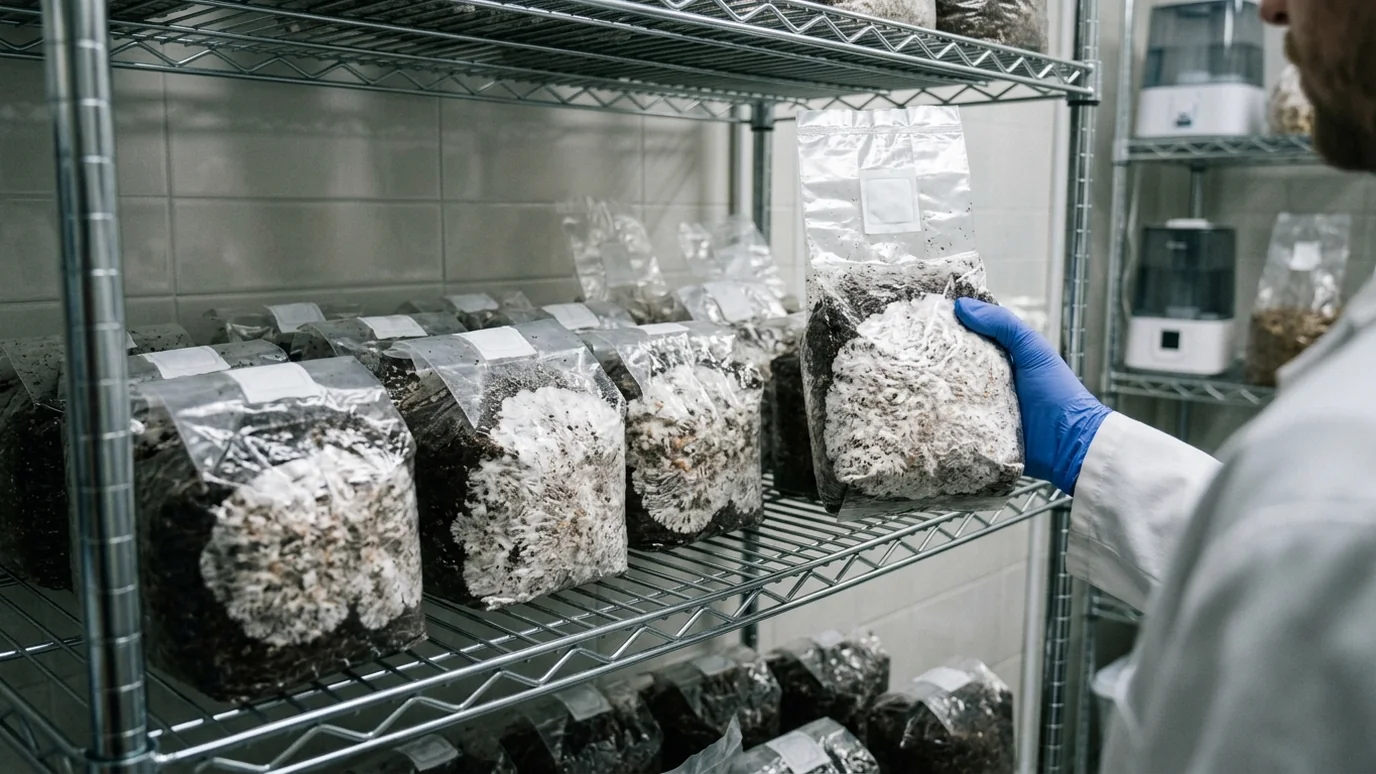
CVG (coco coir, vermiculite, gypsum) is nutritionally poor by design — it can be pasteurized rather than sterilized because contaminants have little to eat. Master's Mix is the opposite: rich in nutrients for both mycelium and contaminants.
The result: colonized fully, Master's Mix fruits with dramatically higher yields. 50–100% biological efficiency (weight of mushrooms as percentage of dry substrate weight) is achievable. CVG rarely exceeds 30%.
Sterilization Is Non-Negotiable
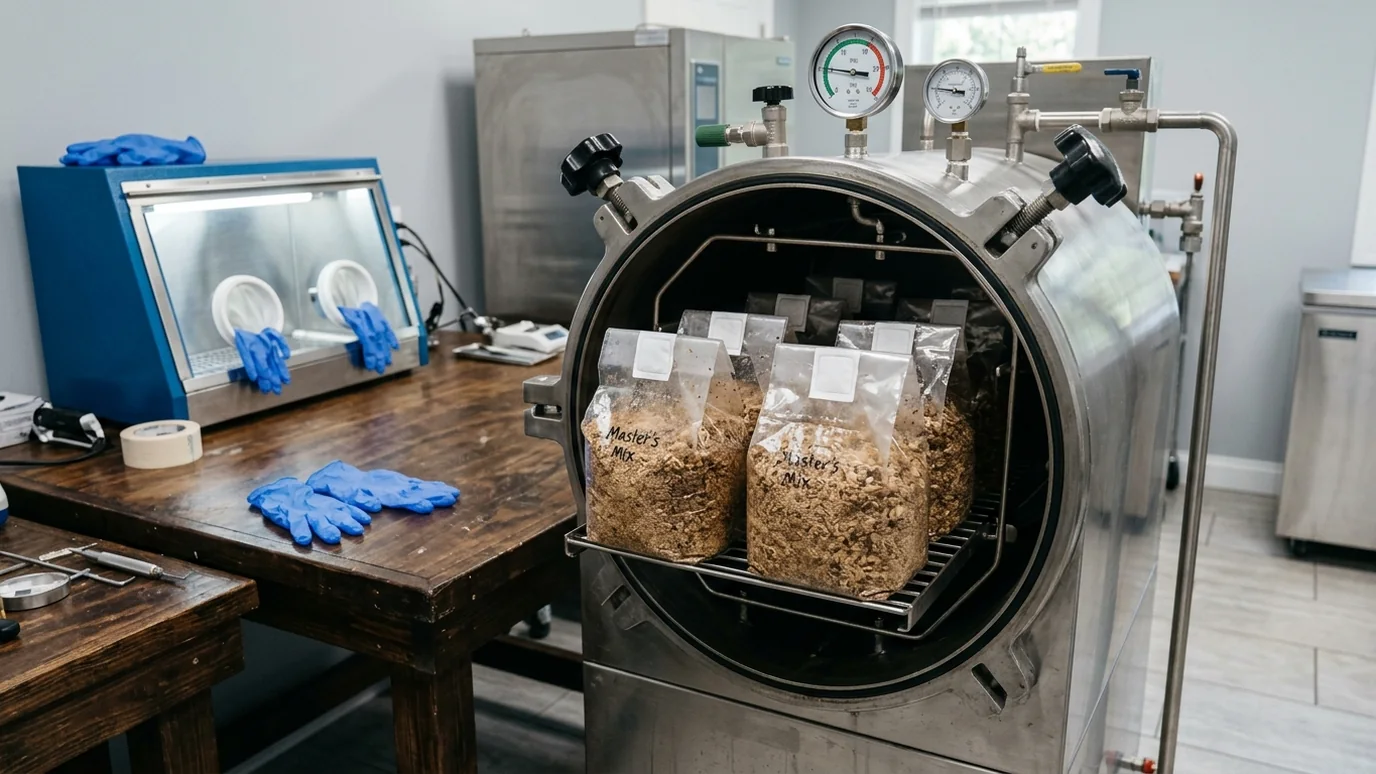
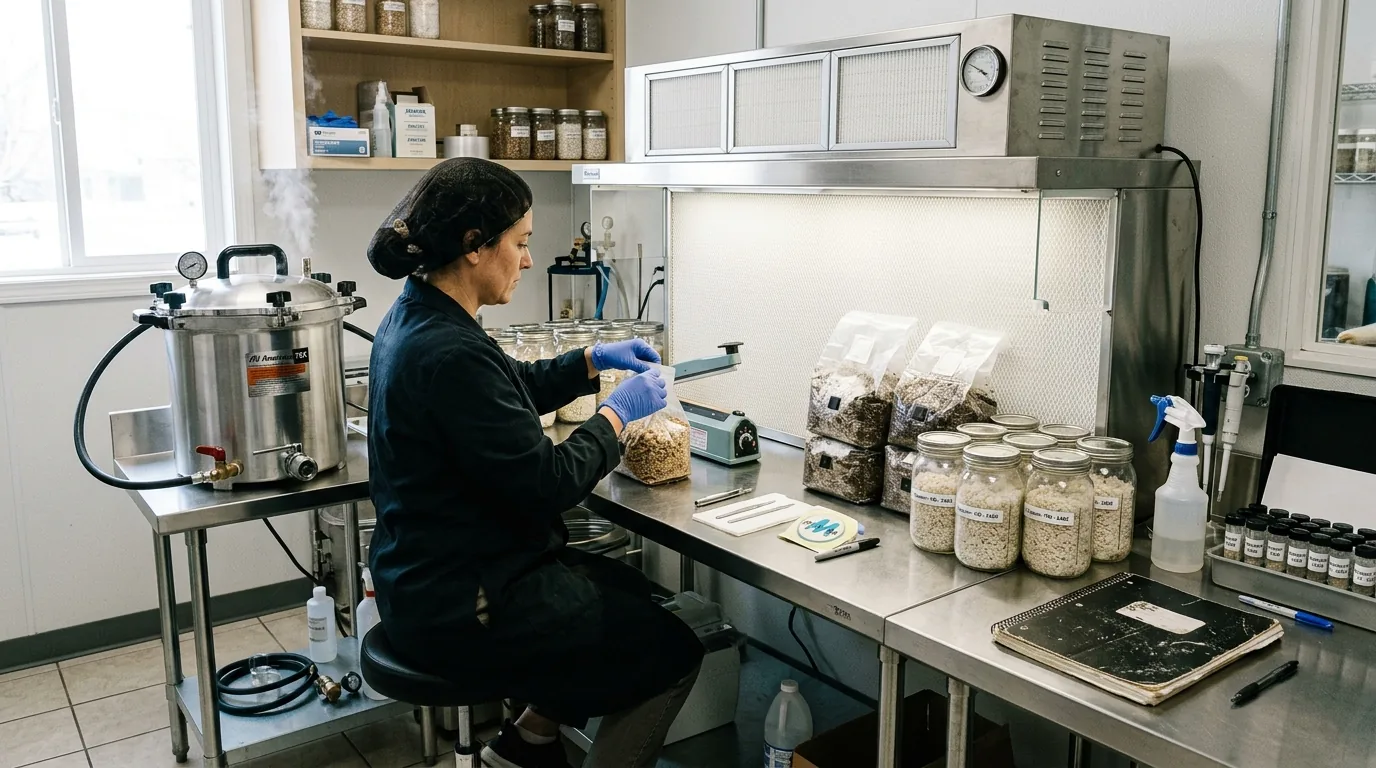
Unlike CVG, Master's Mix must be pressure sterilized — 15 PSI for 2.5 hours minimum. Pasteurization is insufficient. The nutrient-rich material will grow contamination rapidly at pasteurization temperatures.
Sterilization steps:
- Mix hardwood pellets and wheat bran (or soy hulls) 50/50 by dry weight
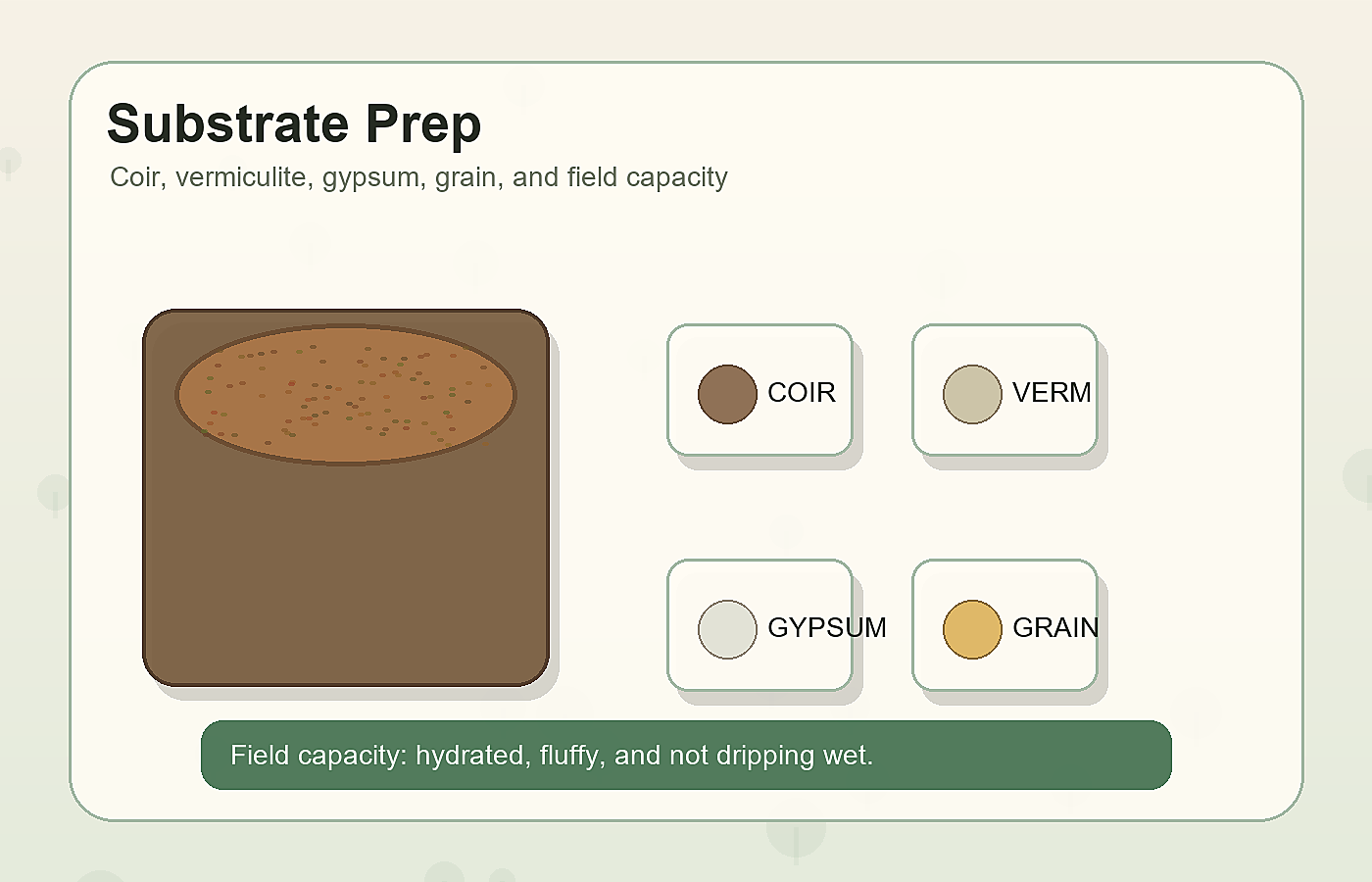
- Hydrate to field capacity: add water until a firm squeeze releases just a few drops
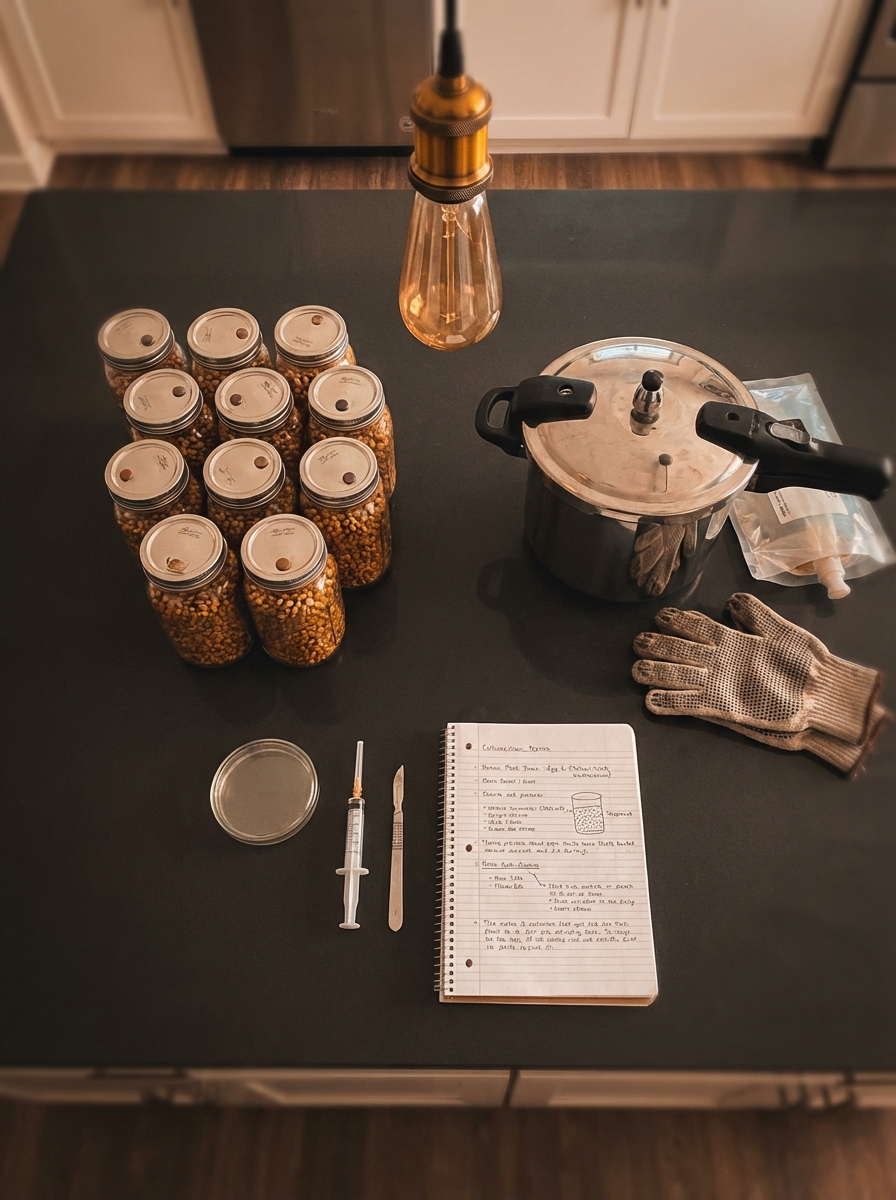
- Fill autoclave bags or mason jars
- Pressure cook at 15 PSI for 2.5–3 hours
- Allow to cool completely (24+ hours) before inoculating
Inoculation and Colonization
Spawn rate: 1:1 to 1:2 (grain spawn to Master's Mix by volume). Master's Mix benefits from higher spawn rates because its nutrition also feeds contaminants during the colonization window. More spawn means faster colonization and reduced contamination risk.
Colonization temperature: 72–78°F. Colonization in approximately 14–21 days.
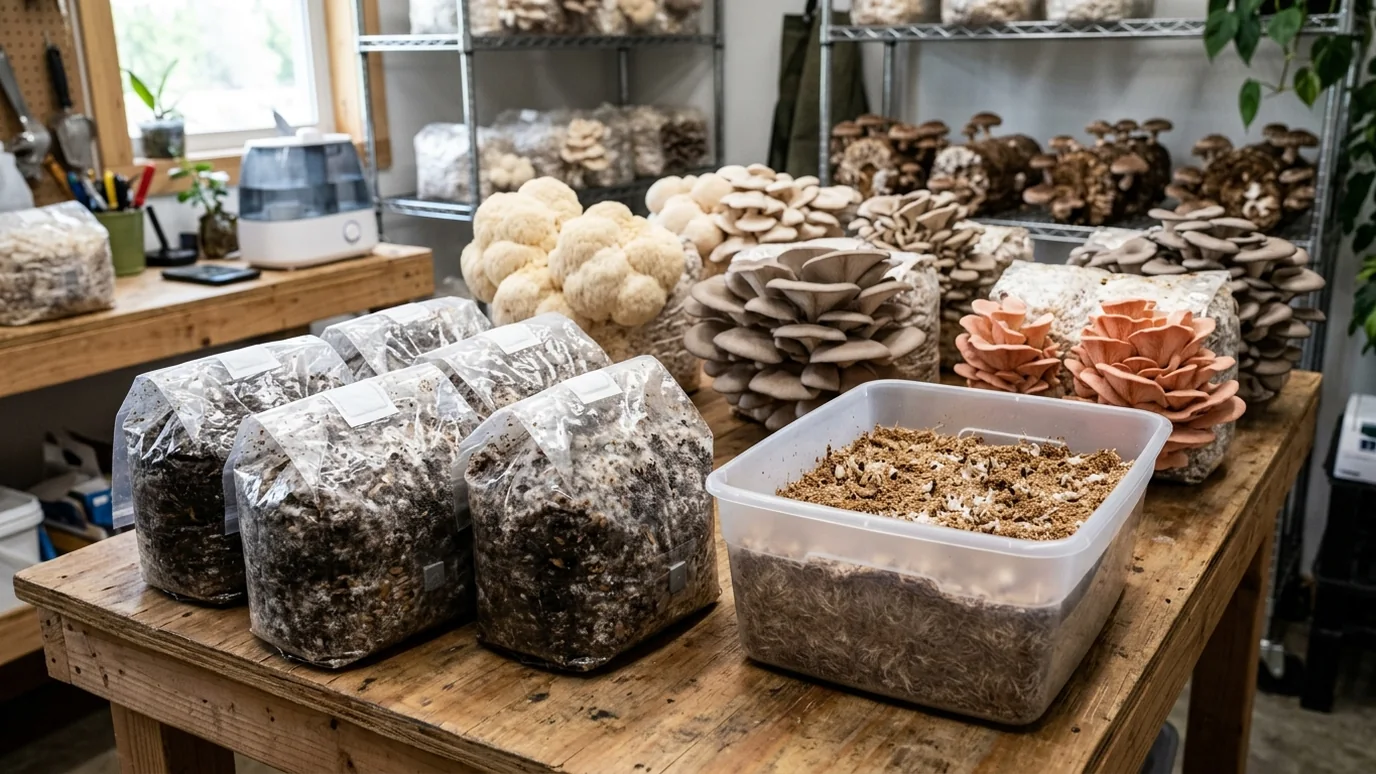
Signs of healthy colonization: Dense white rope-like mycelium throughout the mix. Metabolic heat (the substrate may feel warm relative to ambient temperature — this is normal and desired).
Fruiting
After full colonization:
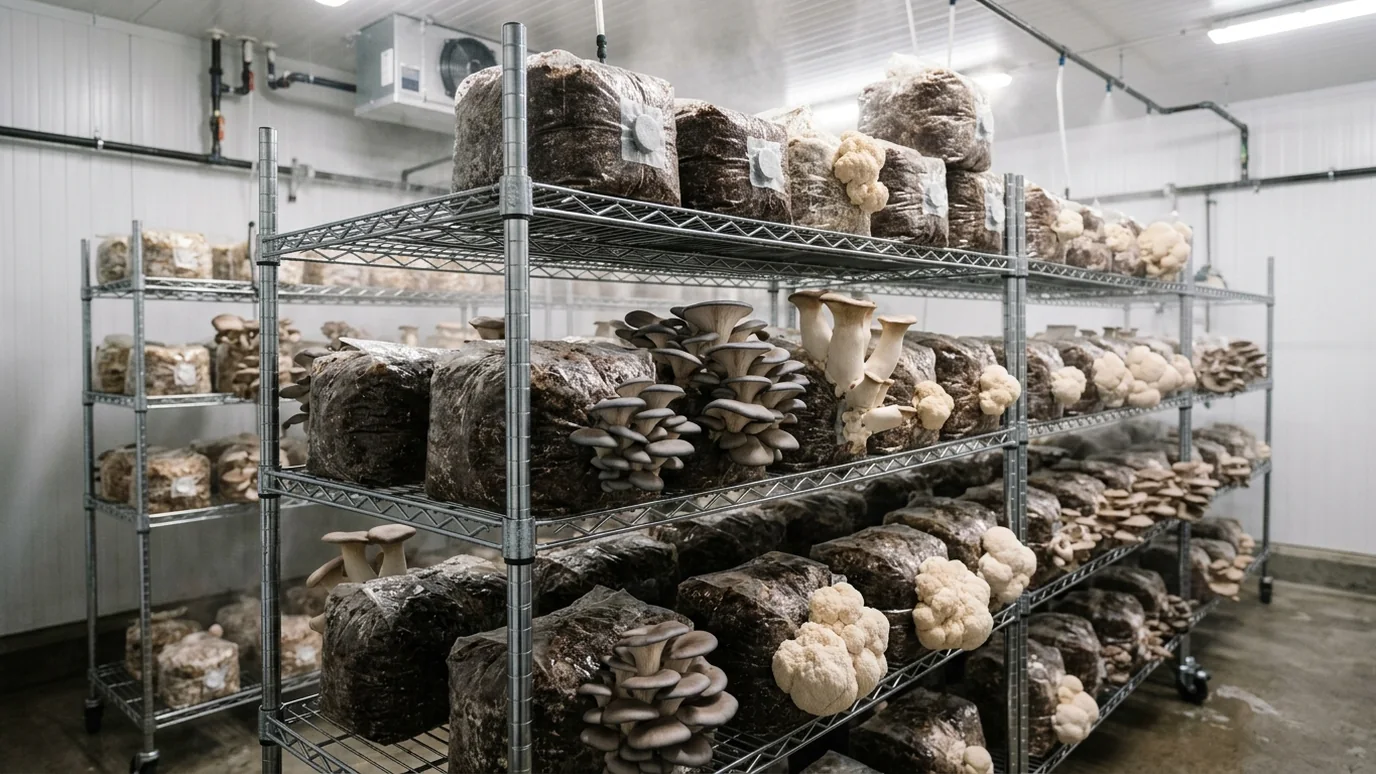
- Move to fruiting conditions: 70–75°F, 90–95% humidity, 12 hours light/12 hours dark
- Apply light misting to surface if dry
- Expect pins within 7–14 days of initiation
- Master's Mix typically produces 2–3 productive flushes before substrate exhaustion
Yield expectations: 50–100% biological efficiency is achievable with healthy colonization and good fruiting conditions. A 2-pound (dry weight) block may yield 1–2 pounds of fresh mushrooms across all flushes.
Contamination Management
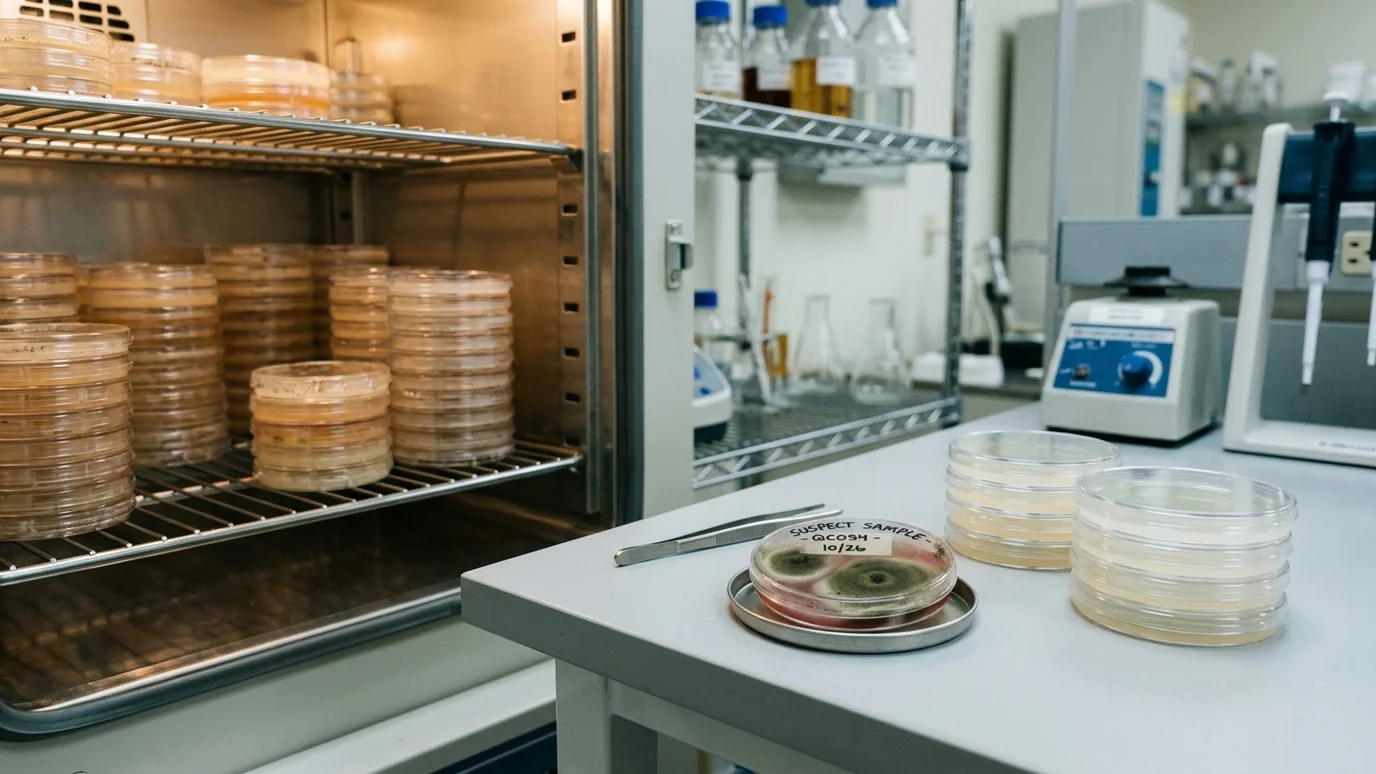
Given Master's Mix's higher contamination susceptibility:
- Work in a still-air box or flow hood for inoculation — open-air transfers have too high a failure rate
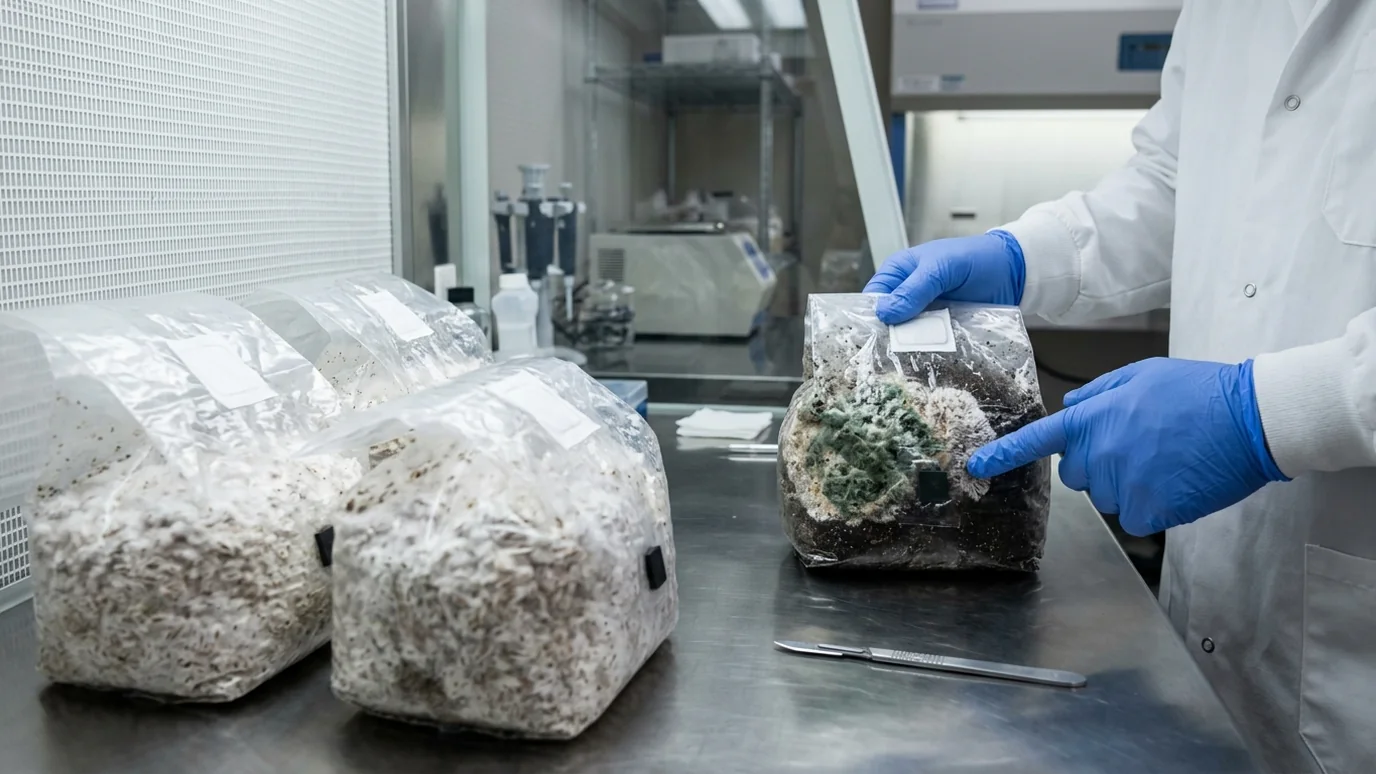
- Inspect jars or bags daily during colonization — green mold (Trichoderma) is the primary threat
- Do not use Master's Mix if your sterile technique is not reliable — establish clean technique on grain spawn first
Variants
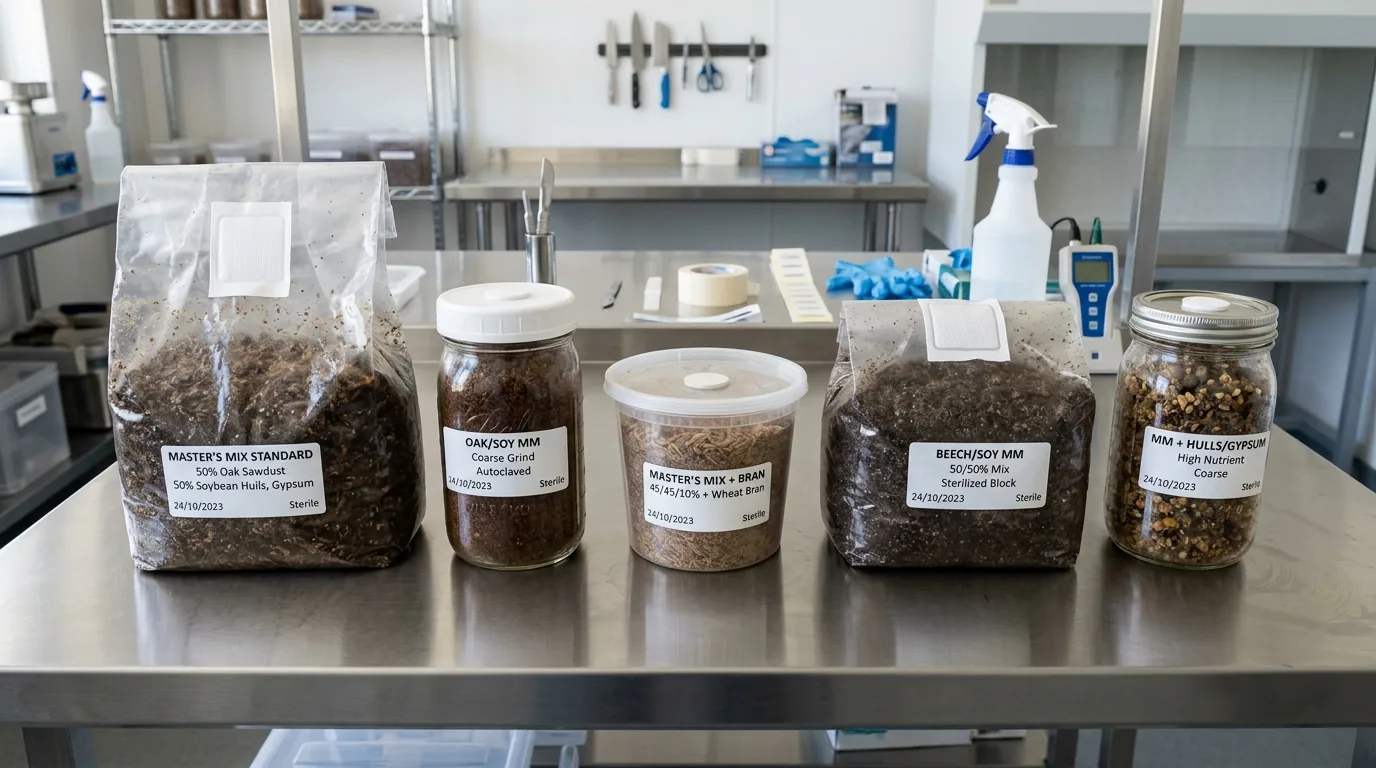
Agar-inoculated Master's Mix blocks: Inoculating directly from agar culture (rather than grain spawn) gives additional contamination protection because agar cultures can be visually confirmed clean.
All-in-one bags: Pre-sterilized Master's Mix bags with injection ports are available from some vendors, allowing inoculation without a pressure cooker.
Who Should Use Master's Mix
- Experienced growers with reliable sterile technique
- Those prioritizing yield over simplicity
- Cultivators who have successfully grown on CVG and want to push yield limits
Common Problems & Troubleshooting
See the Contamination Guide for common issues.
Tips for Success
Take notes at every stage. Consistency beats perfection.