Drying and Storing Mushrooms: Maximizing Potency and Shelf Life
Everything you need to know about Drying and Storing Mushrooms: Maximizing Potency and Shelf Life — from materials to first harvest.

What You'll Need
- See full supply list in guide below.
Find grow supplies at vendors in our Directory.
Step-by-Step Process
Drying and Storing Mushrooms: Maximizing Potency and Shelf Life
Fresh psilocybin mushrooms are about 90% water. The moment they are harvested, enzymatic activity accelerates and psilocybin begins degrading — not dramatically in the first 24 hours, but substantially within days if left undried. Mold is an additional risk: mushrooms at 90% moisture are an ideal substrate for mold growth, and an improperly stored batch can become unsafe to consume within a week. Proper drying and storage converts a fresh harvest into a stable, long-shelf-life product that retains as much of its original potency as possible.
This guide covers the full process: pre-drying, equipment options, testing for proper dryness, and long-term storage best practices.
Why Proper Drying Matters
Potency preservation: Psilocybin is relatively stable as a dry compound but degrades through oxidation and hydrolysis in the presence of moisture. Fresh mushrooms left at room temperature for even 3–5 days can lose measurable potency. Once dried to cracker-dry (below 5% moisture content), psilocybin becomes significantly more stable and retains potency for years under proper storage conditions.
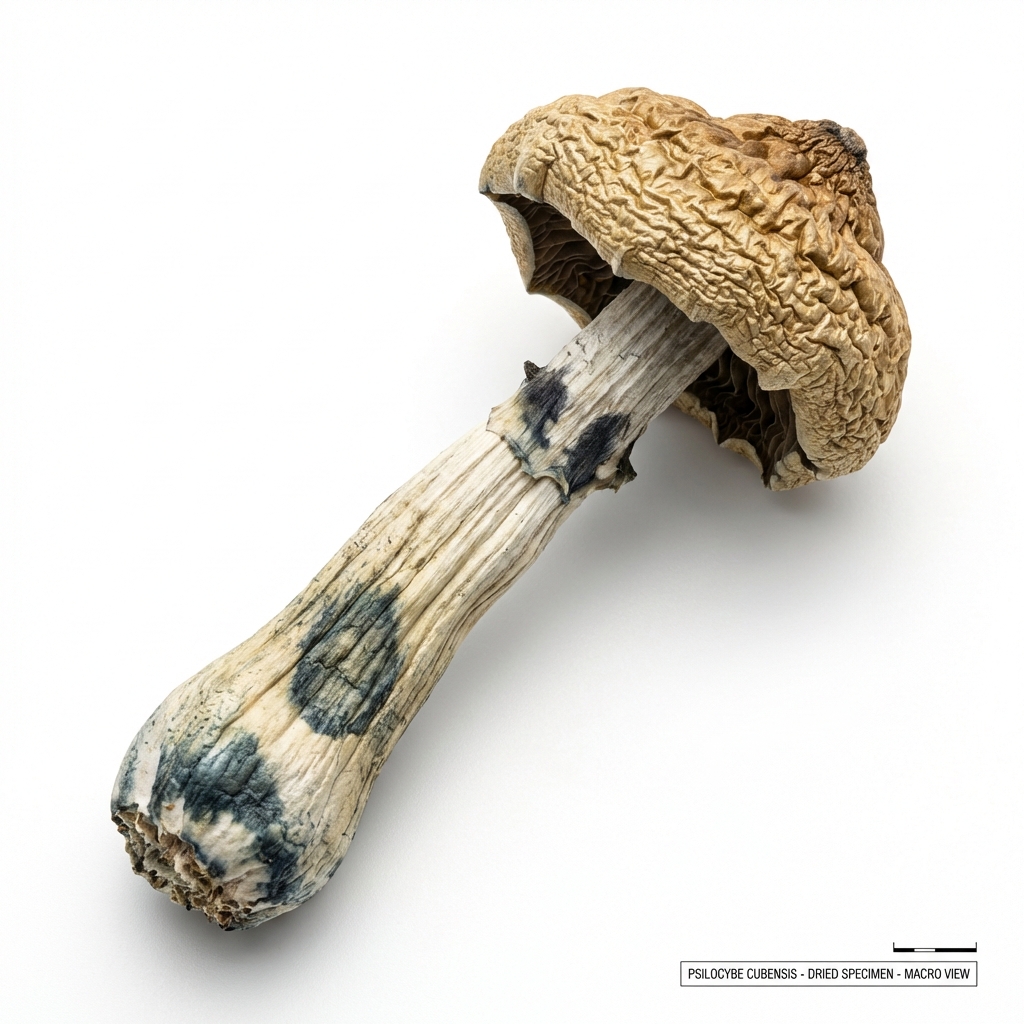
Mold prevention: Fresh mushrooms sitting in humid air will begin showing mold within days. Any mushroom that appears bluish-gray, fuzzy, or slimy has mold growth and should be discarded. Mold is not just a storage concern — it can produce mycotoxins. Rapid drying eliminates the moisture that mold requires before it can establish.
Accurate dosing: Fresh mushrooms vary enormously in water content depending on species, strain, and how recently they absorbed moisture. A fresh mushroom weighing 10g might weigh 1–1.5g dry. Dry weight is the only consistent metric for dosing — attempting to dose by fresh weight introduces significant variability.
Pre-Drying: The First 12–24 Hours
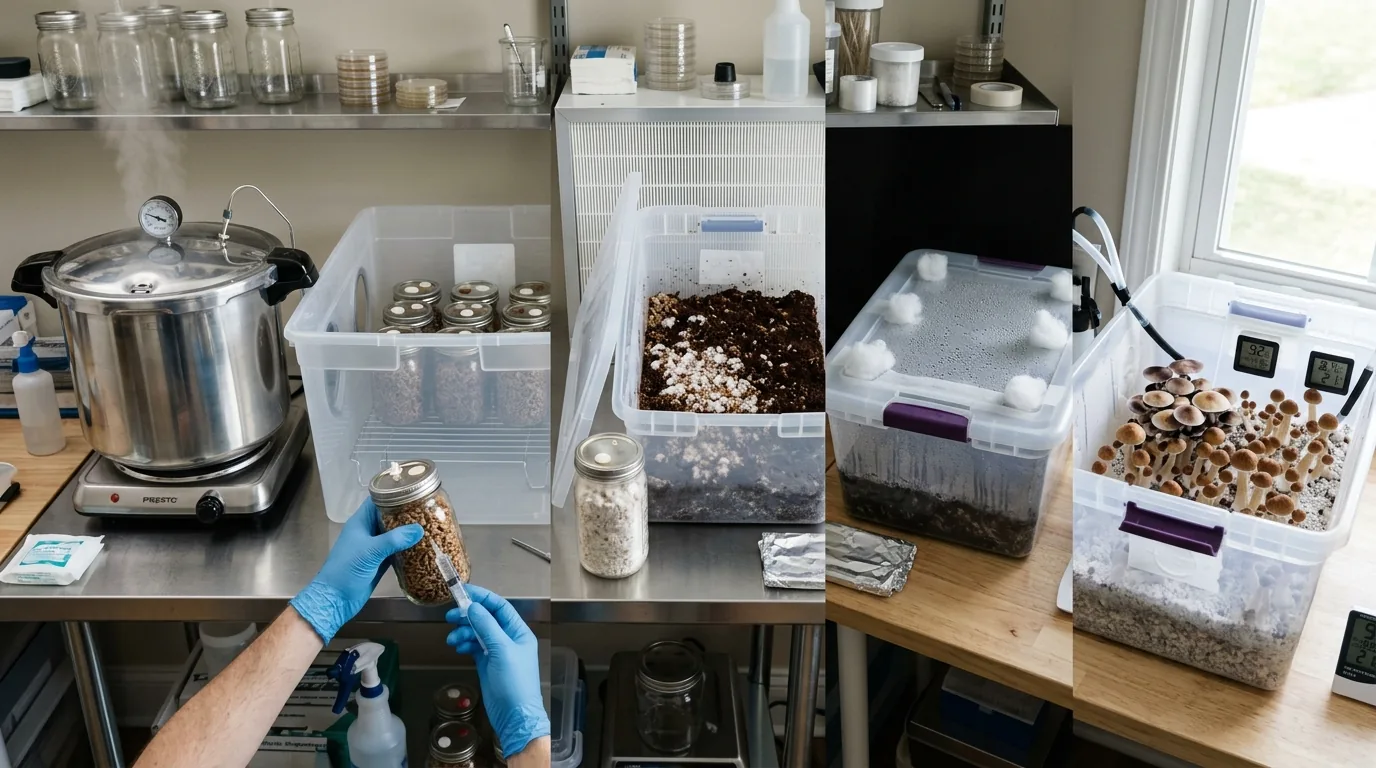
Before using any powered drying equipment, allow freshly harvested mushrooms to pre-dry at room temperature. This removes the bulk of surface moisture and dramatically reduces the time needed in a dehydrator or desiccant setup.
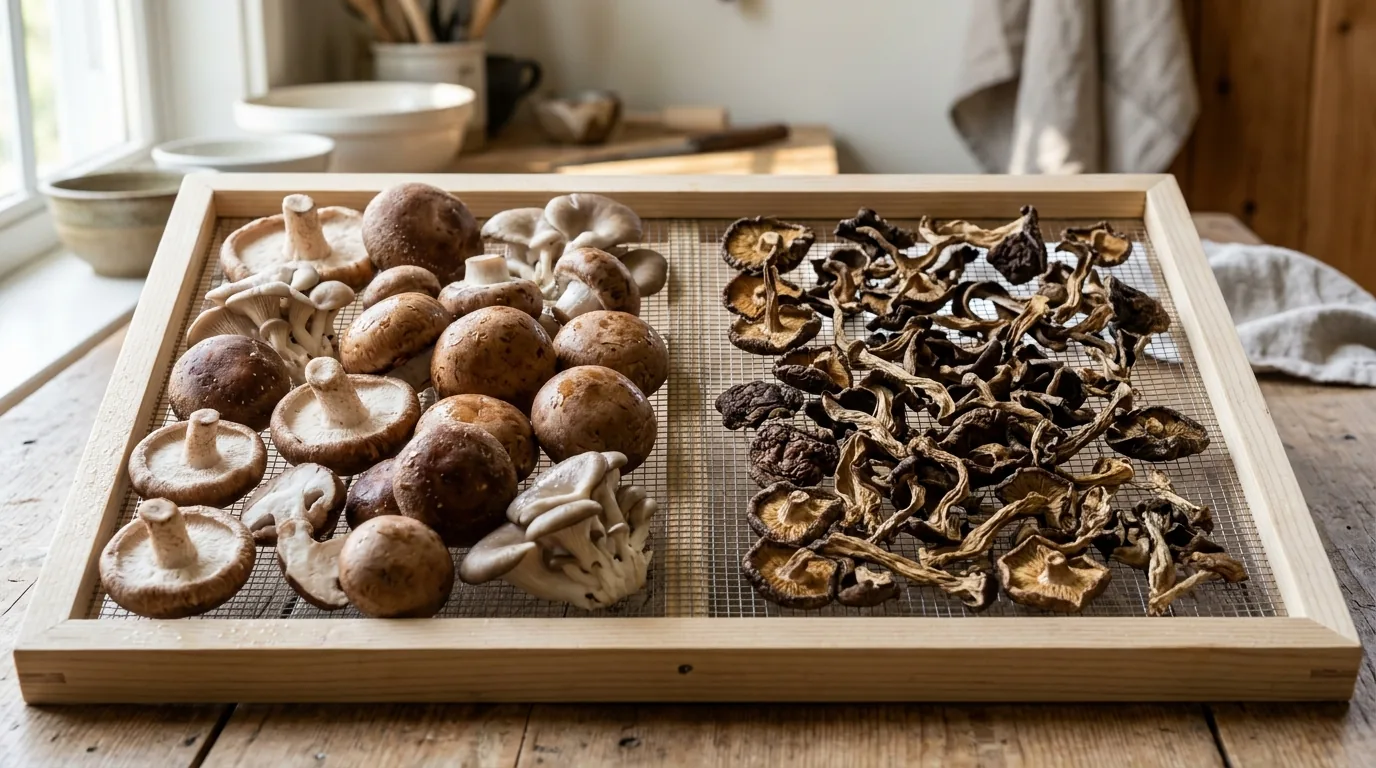
Method: Lay mushrooms in a single layer on a clean paper towel, newspaper, or drying rack. Do not stack or overlap them — airflow around each mushroom matters. Place them in a room-temperature location (65–75°F) with good air circulation, away from direct sunlight.
Fan assistance: Position a small fan to blow across — not directly onto — the mushrooms. A fan at low speed at the edge of the table, directed past the mushroom surface, significantly accelerates pre-drying without damaging tissue. Within 12–24 hours, mushrooms should be visibly reduced in size and feel leathery or slightly tacky rather than wet. Caps will have curled slightly.
Pre-drying gets you to approximately 50–70% of target dryness with no electricity and no specialized equipment. It also hardens the outer tissue, which helps with subsequent dehydrator processing.
Dehydrator Drying
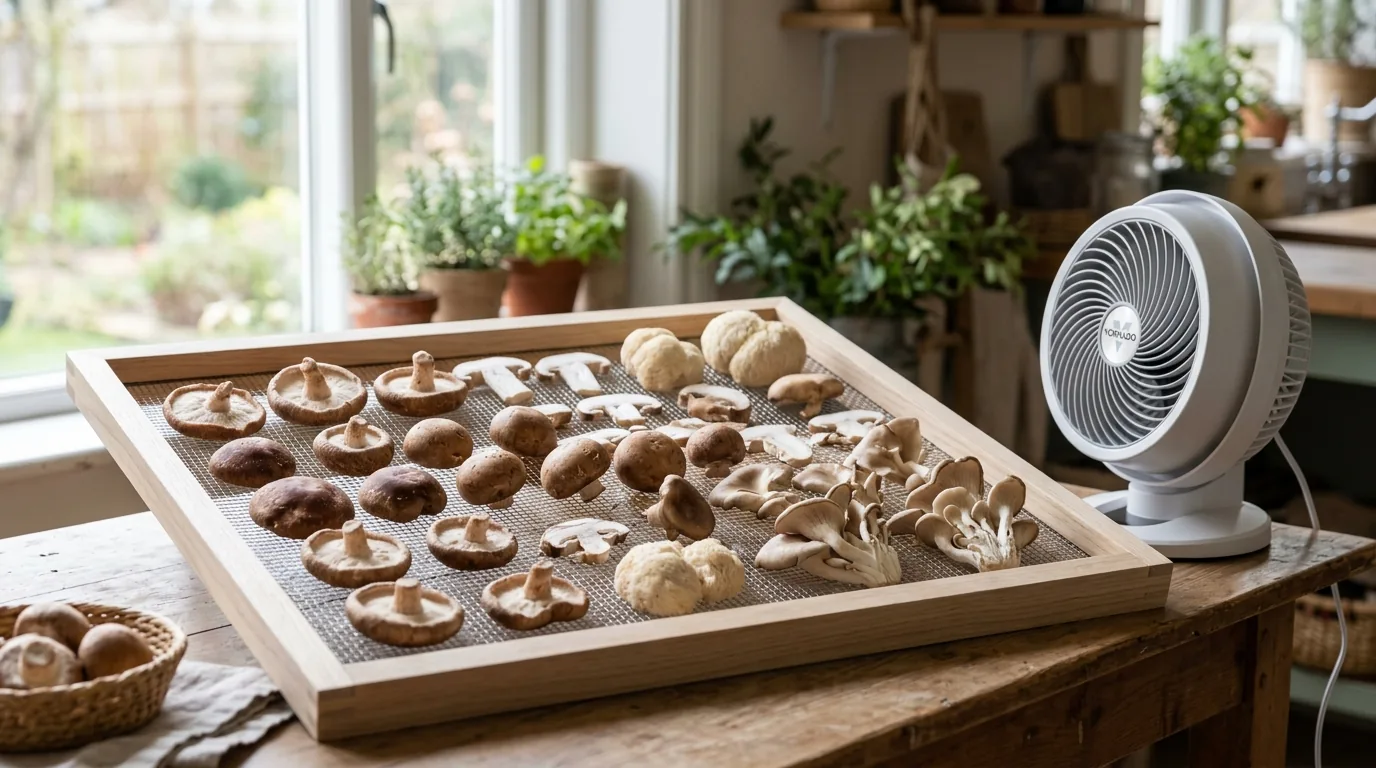
A food dehydrator with a temperature-adjustable thermostat is the most efficient way to dry mushrooms consistently. The critical constraint is temperature.
Maximum temperature: 95°F / 35°C. Psilocybin degrades measurably at temperatures above 100°F and breaks down more rapidly above 115°F. This is well below the temperatures used for drying most foods — typical dehydrator settings for fruits and vegetables (125–145°F) are too hot for psilocybin-containing mushrooms. Set the dehydrator to the lowest available setting, confirm the actual temperature with a thermometer (dehydrator dials are often inaccurate), and target 85–95°F.
Process: Place pre-dried mushrooms on dehydrator trays in a single layer. Run the dehydrator for 4–8 hours depending on mushroom size and pre-dry completeness. Larger stems take longer than caps. Rotate trays every 2 hours if your dehydrator has uneven airflow. Check every 2 hours after the 4-hour mark and remove individual mushrooms as they reach cracker-dry texture.
No thermostat control? If your dehydrator has no thermostat and runs at a fixed high temperature, use it only as a supplement to desiccant drying or skip it entirely in favor of desiccant alone.
Desiccant Drying
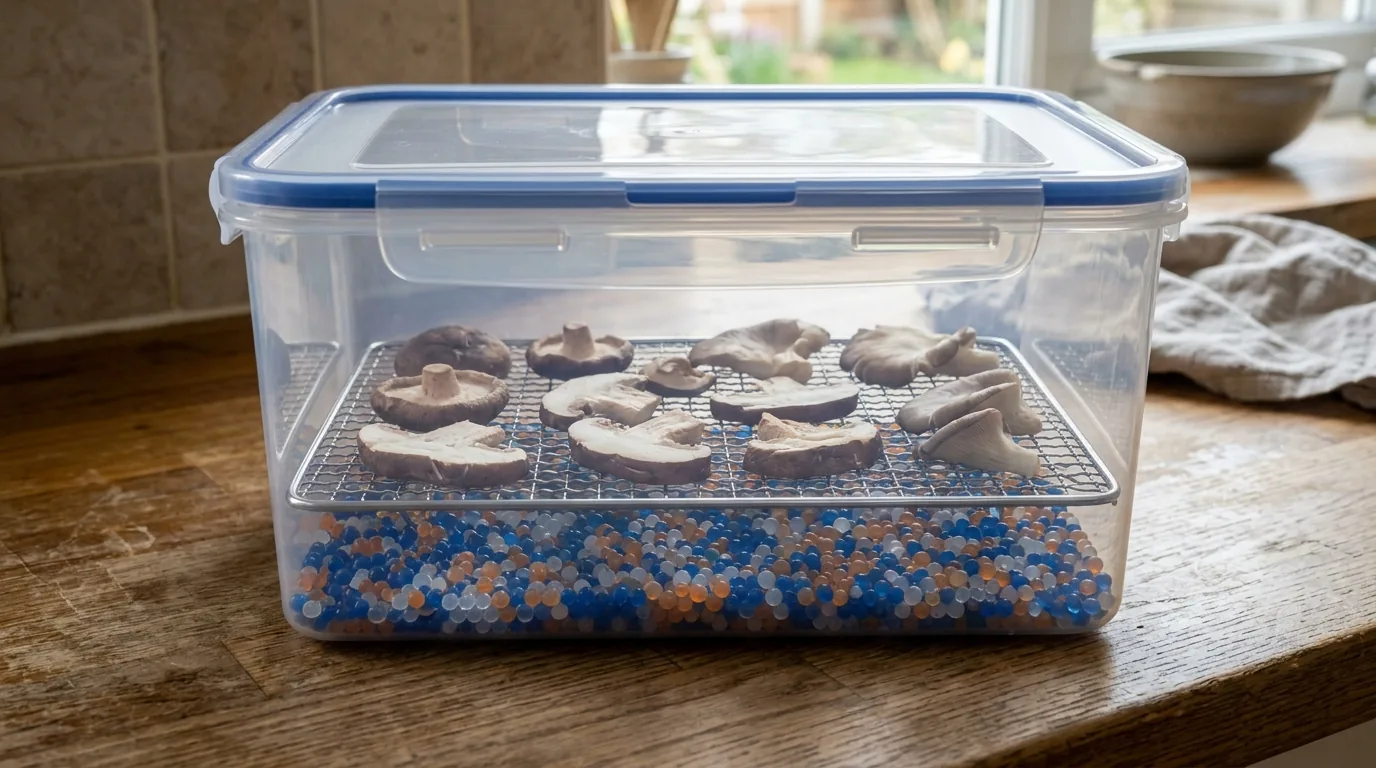
Food-grade silica gel desiccant is the standard method for achieving cracker-dry consistency without heat. Desiccant absorbs moisture from the air around it, gradually drawing moisture out of mushrooms stored in the same sealed container.
Setup: Place a layer of indicating silica gel beads on the bottom of an airtight container (mason jar or large plastic tub). Indicating silica turns pink or dark when saturated — monitor and recharge by spreading it on a baking sheet in a 250°F oven for 1–2 hours until it returns to its original color (typically orange or blue depending on type). Lay mushrooms on a raised platform (a small wire rack or crumpled paper towels) above the desiccant layer so they are surrounded by dry air but not in direct contact with the silica.
Timeline: Desiccant alone can take 2–7 days to achieve cracker-dry consistency depending on the volume of mushrooms and the amount of desiccant. Pre-drying before using desiccant dramatically reduces this time. Combining dehydrator pre-drying with desiccant finishing produces the most reliable results.
Calcium chloride: Also effective as a desiccant, often sold as "Damp Rid" refill crystals. More aggressive moisture absorption than silica gel but requires the same sealed-container approach and should not contact the mushrooms directly.
Testing for Cracker-Dry Consistency
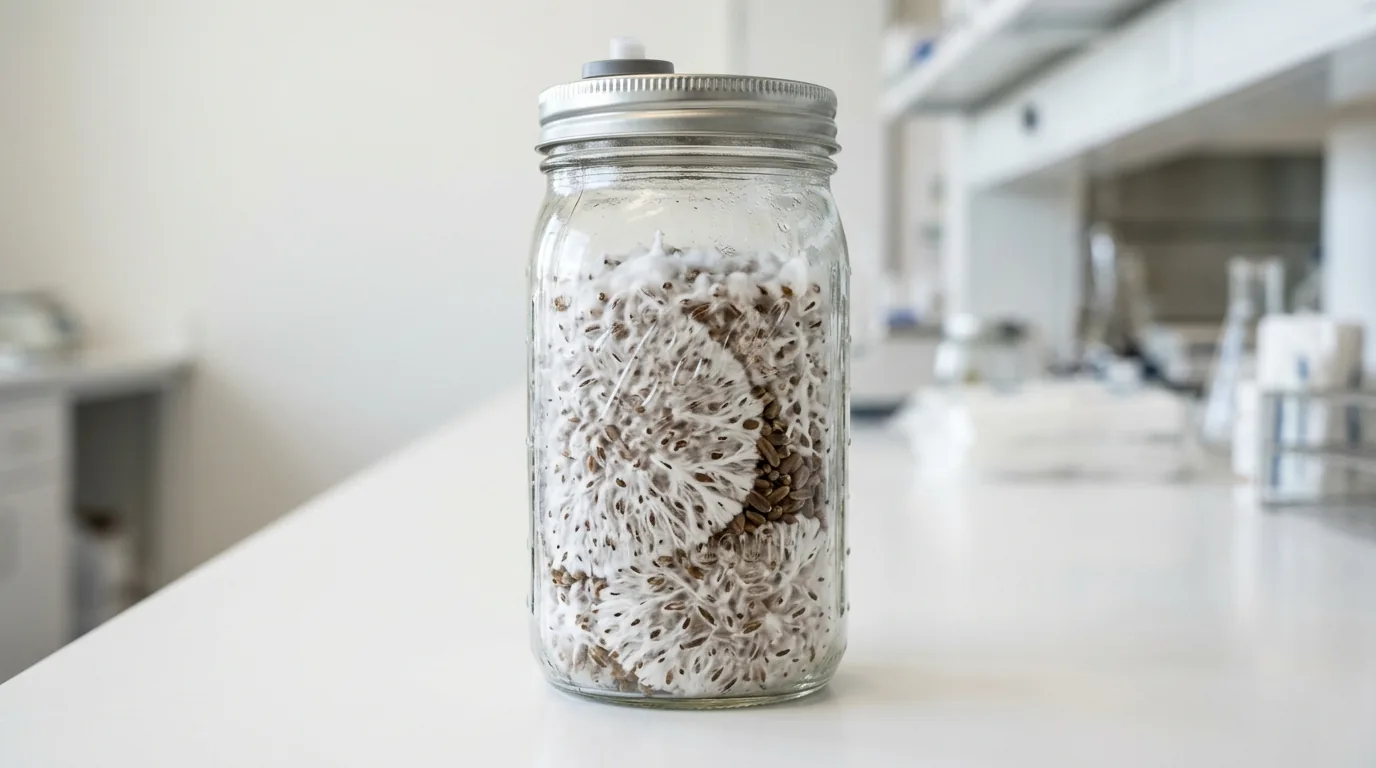
"Cracker-dry" is the target: mushrooms that snap cleanly rather than bend when broken. The stem should break with an audible snap, similar to breaking a cracker or thin pretzel. Caps should be brittle and powdery at the edges rather than pliable.
If mushrooms bend without snapping, they are not dry enough. Return them to the desiccant container or dehydrator and check again in 4–8 hours. Partially dried mushrooms stored in a sealed container will rehydrate from their own residual moisture and will not keep well.
A secondary test: place a single dried mushroom in a small zip-lock bag, seal it, and hold it to a light source. If condensation appears on the inside of the bag within 5–10 minutes, the mushroom is releasing moisture and is not yet cracker-dry.
Storage Containers
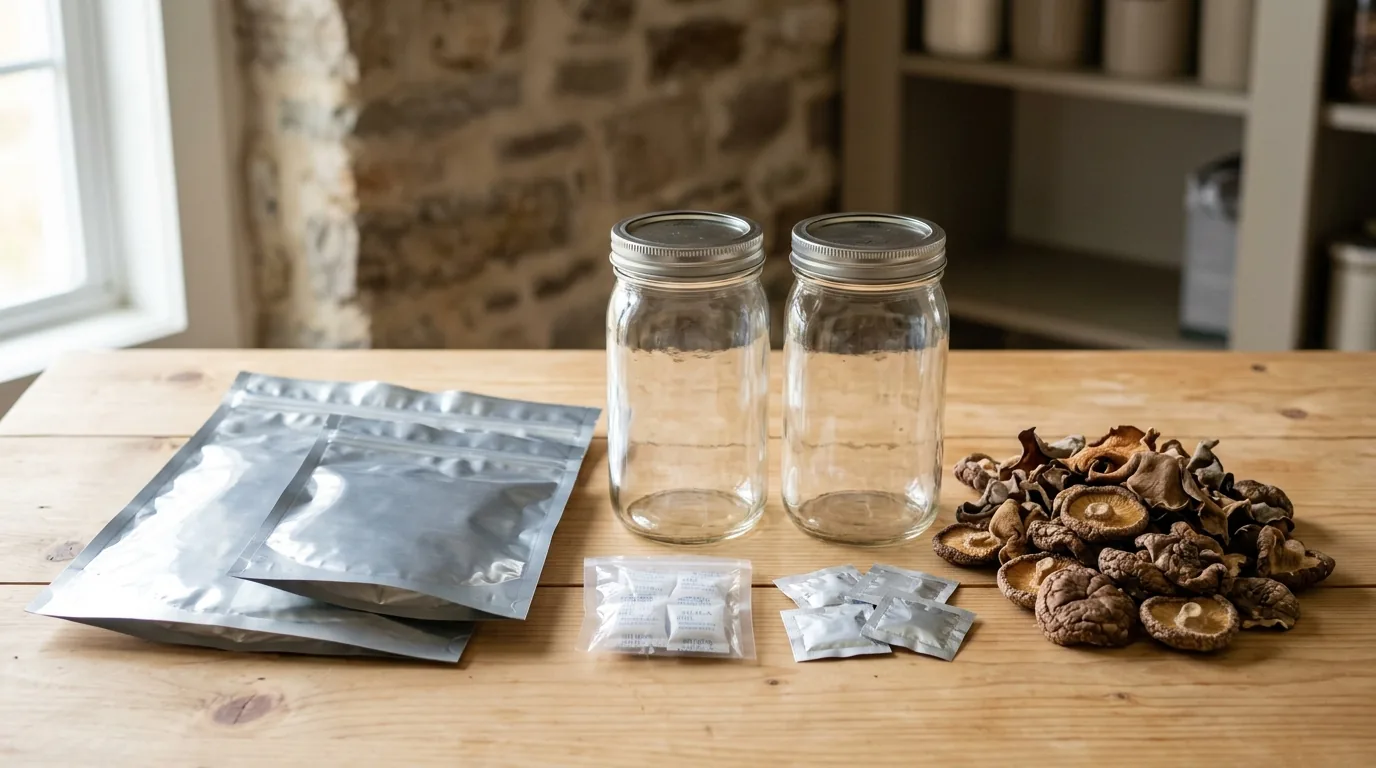
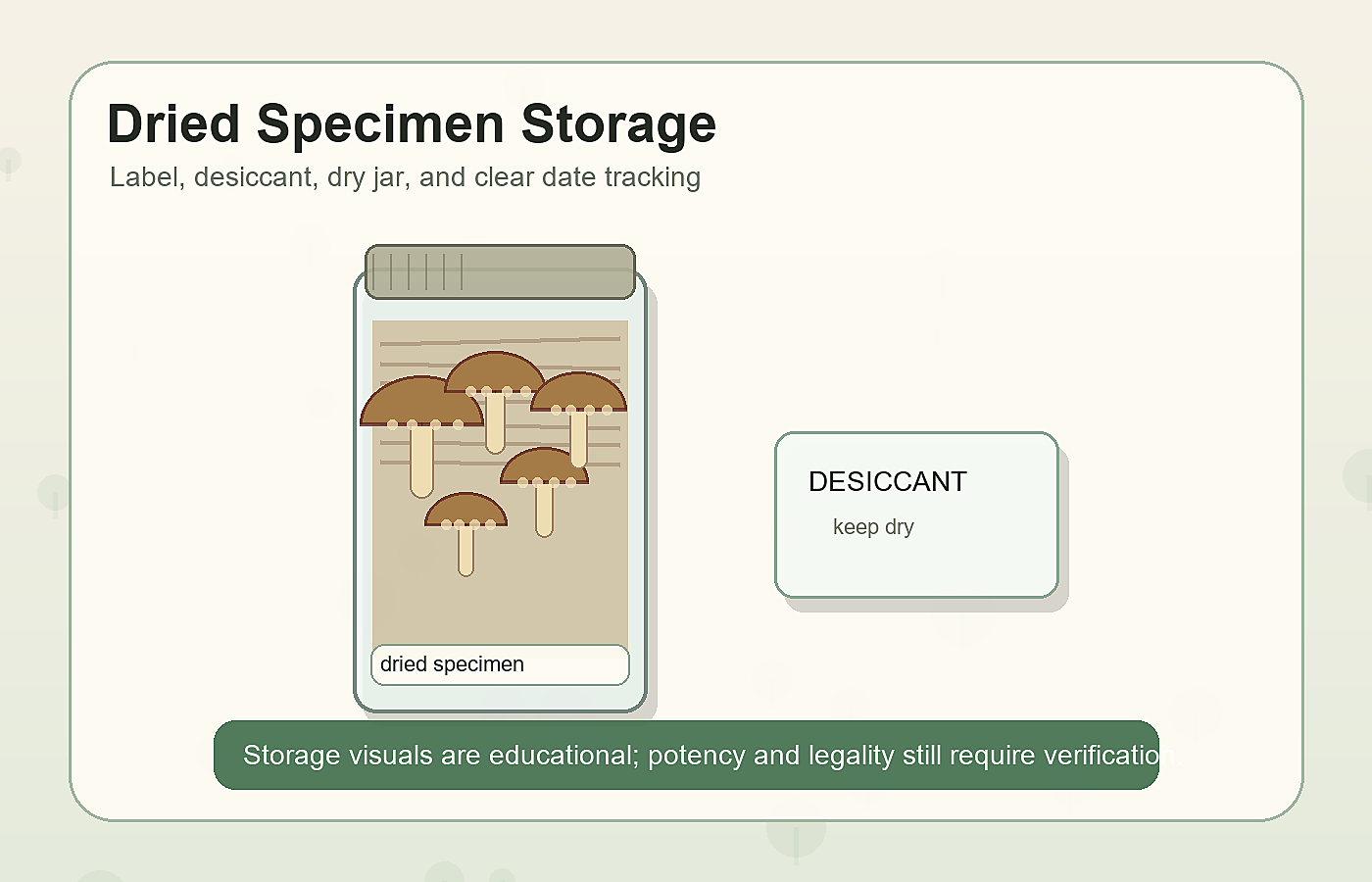
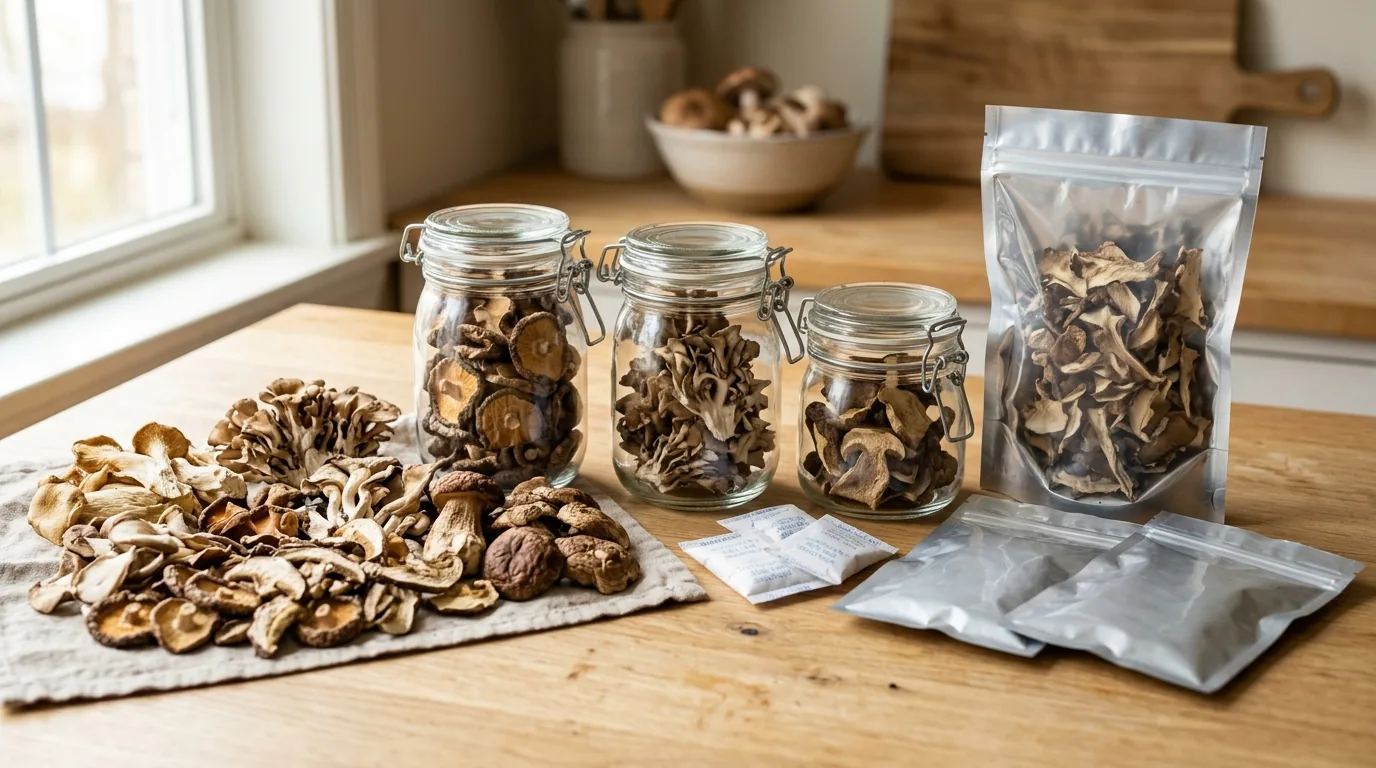
Short-term storage (1–6 months): A clean, airtight mason jar with a small desiccant packet inside. Store in a cool, dark location. A kitchen cabinet away from the stove works well. Do not use jars stored in refrigerators or freezers for short-term — temperature cycling causes condensation when jars are removed and returned repeatedly.
Long-term storage (6 months to 2+ years): Mylar bags with an oxygen absorber offer superior protection against oxidation. Heat-seal the bag after adding a desiccant packet. Mylar blocks light completely and creates an oxygen-poor environment that minimizes oxidation of psilocybin. Store sealed mylar bags in a cool, dark location or in a freezer (freezing is acceptable for sealed mylar with oxygen absorber — just allow the sealed bag to return to room temperature before opening to avoid condensation).
Avoid: Plastic sandwich bags (not airtight, allow light and oxygen through), unsealed containers, containers with residual food odors, and any container that previously held moisture-absorbing or reactive materials.
Light, Heat, and Oxygen Avoidance
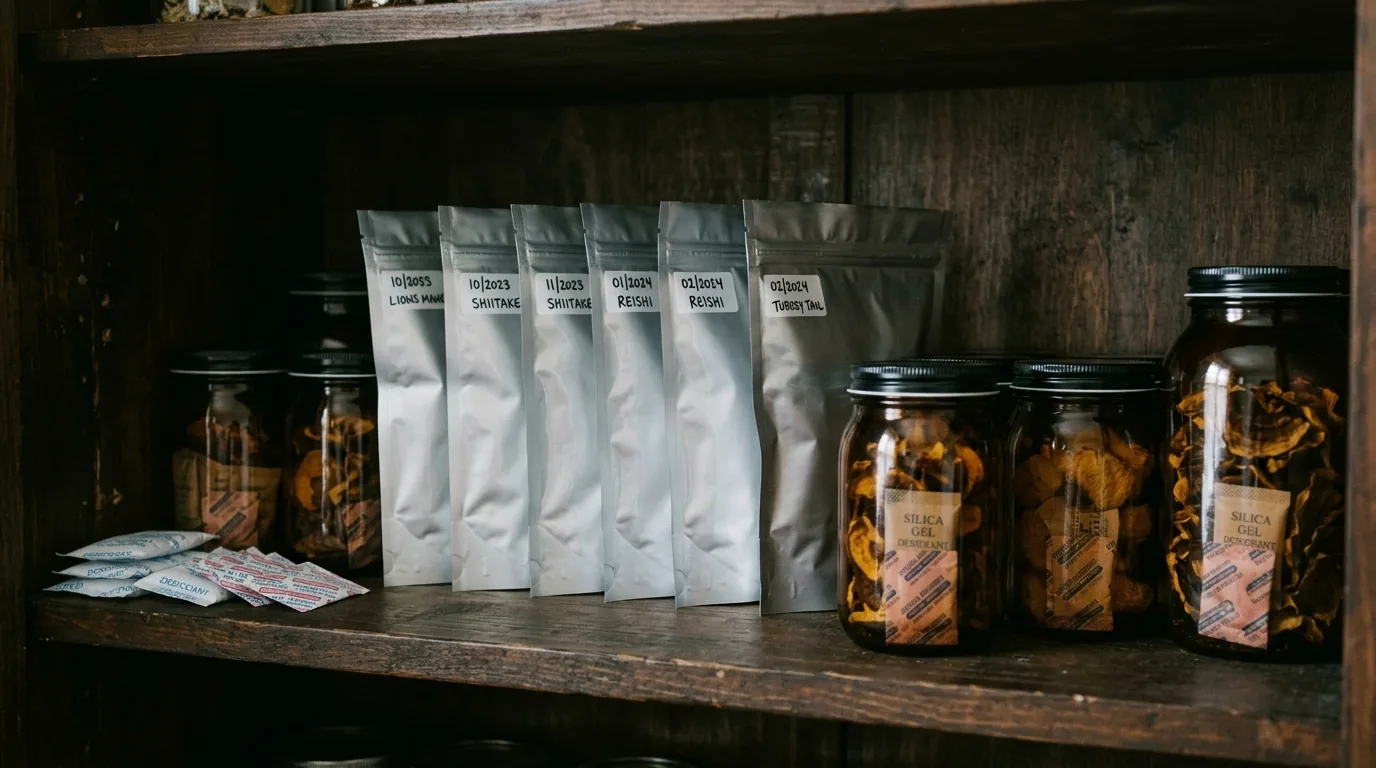
The three enemies of stored psilocybin are light, heat, and oxygen. Each accelerates degradation.
Light: UV exposure breaks down psilocybin directly. Amber-colored glass jars provide some UV protection. Mylar provides complete blocking. Never store mushrooms in clear bags or clear containers in lighted areas.
Heat: Storage above 75°F accelerates degradation over long time periods. A cool basement or interior cabinet (60–70°F) is significantly better than a warm shelf near a window or heat source.
Oxygen: Oxidation is a primary degradation pathway. Oxygen absorbers (food-grade iron oxide packets, available from canning supply stores) scavenge oxygen from sealed containers. In a mylar bag with a desiccant packet and oxygen absorber, psilocybin-containing mushrooms remain stable for multiple years.
Expected Shelf Life
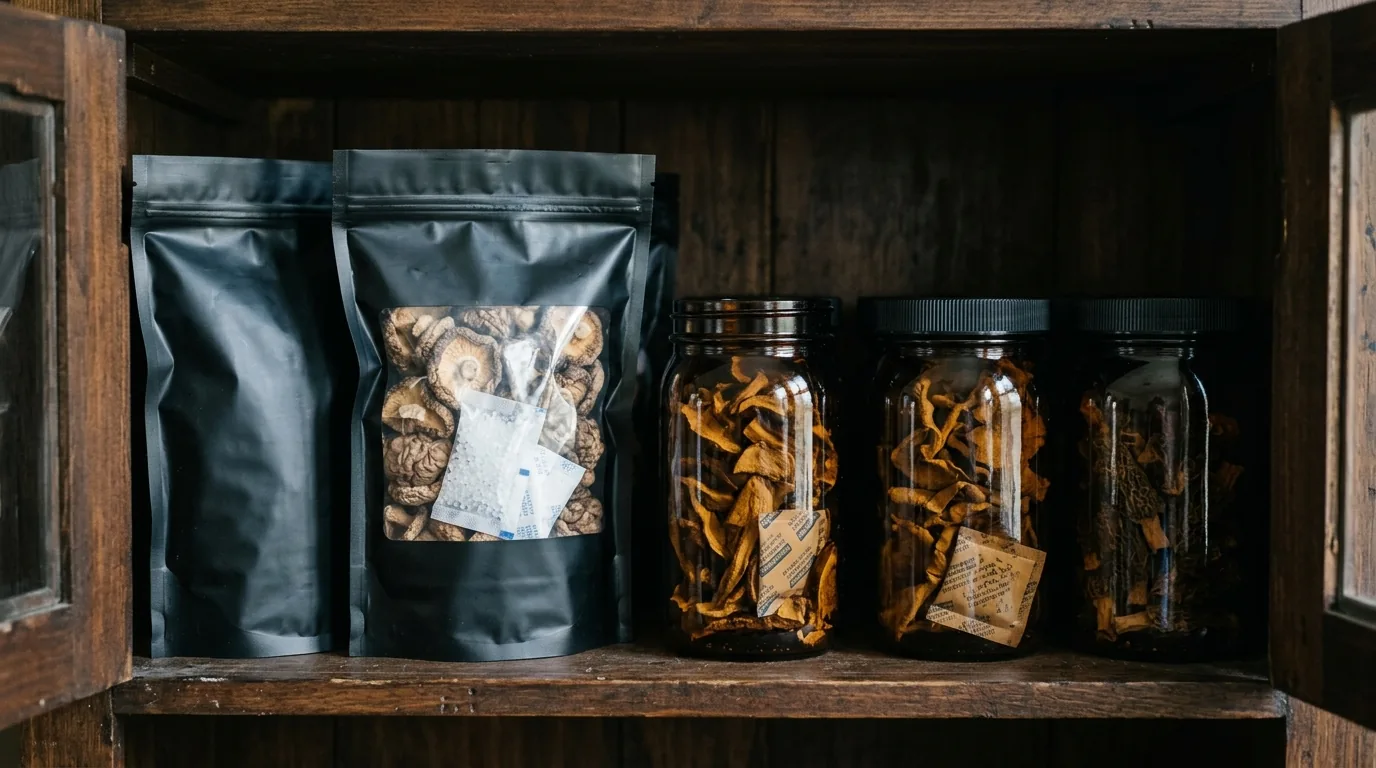
Under proper conditions — cracker-dry, sealed container, desiccant, dark, cool:
- Mason jar with desiccant: 12–24 months with minimal potency loss
- Mylar with desiccant and oxygen absorber: 2–4 years or more
Mushrooms stored improperly — slightly damp, in a clear bag, at room temperature in a warm room — may degrade noticeably within 3–6 months and are at mold risk within weeks if not fully dry.
The time investment in proper drying and storage is modest relative to the time invested in cultivation. Take the extra steps — your harvest will reward you with consistent potency every time you return to it.
Common Problems & Troubleshooting
See the Contamination Guide for common issues.
Tips for Success
Take notes at every stage. Consistency beats perfection.