Flow Hoods and Still Air Boxes: Aseptic Technique
Everything you need to know about Flow Hoods and Still Air Boxes: Aseptic Technique — from materials to first harvest.


What You'll Need
- See full supply list in guide below.
Find grow supplies at vendors in our Directory.
Step-by-Step Process
Flow Hoods and Still Air Boxes: Aseptic Technique
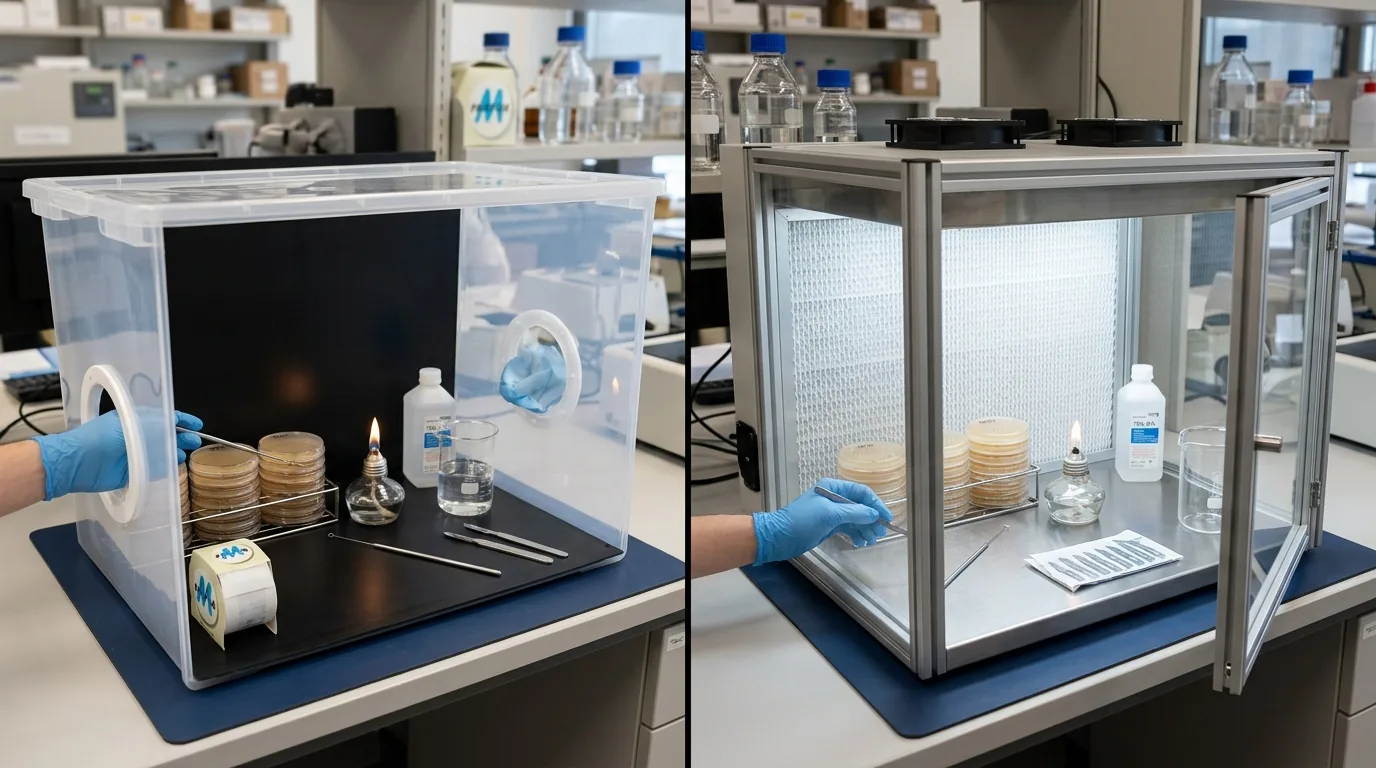
Contamination is the primary limiting factor in mushroom cultivation. The equipment you use to perform inoculations, transfers, and agar work determines your contamination rate more than any other variable. This guide covers the two main approaches to aseptic technique: still air boxes (low-cost, accessible) and laminar flow hoods (high-cost, professional-grade).
Why Aseptic Technique Matters
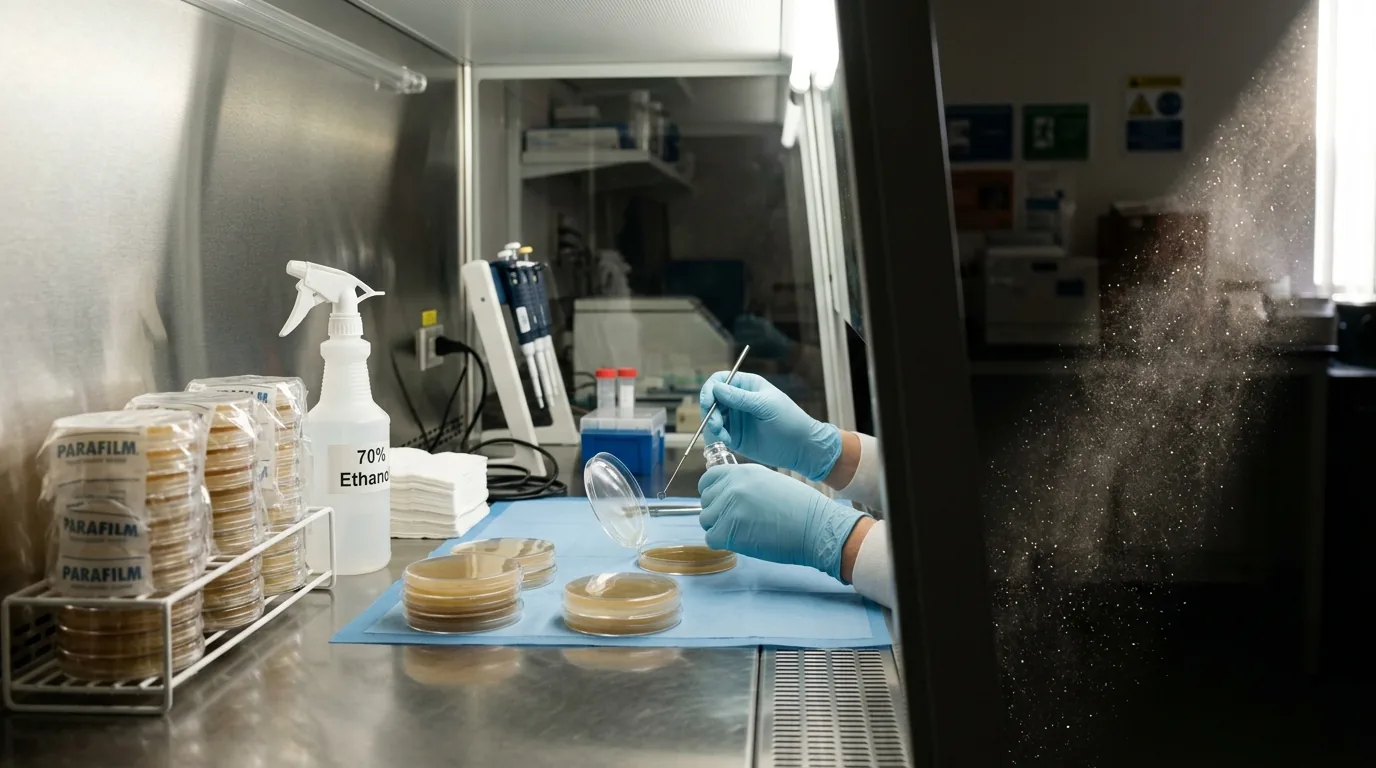
The air in a typical room contains thousands of mold spores, bacterial cells, and other particles per cubic meter. When you open a jar of sterilized grain or a petri dish of agar, these particles immediately begin settling into the sterile medium. The goal of aseptic technique is to minimize the exposure time and particle concentration during work.
Every contamination in a batch can be traced back to one of three sources:
- Insufficient sterilization (technique, time, temperature)
- Contaminated inoculant (dirty syringe, contaminated agar)
- Contaminated environment during the transfer (particles entering while jar is open)
Aseptic technique equipment addresses source #3.
Still Air Box (SAB)
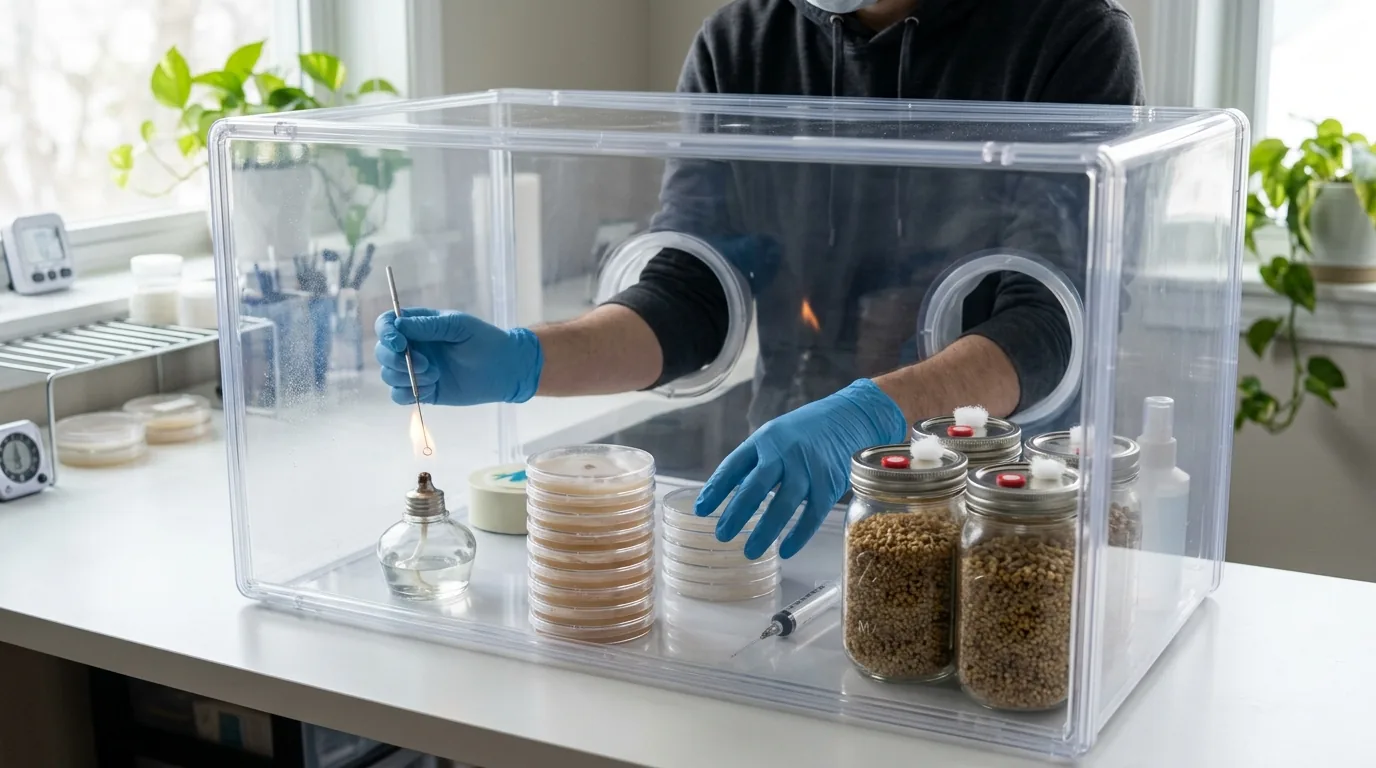
A still air box is a simple, low-cost solution: a large transparent storage tote or aquarium with arm holes cut in the front. The principle is simple — a large, enclosed volume of air that has been allowed to settle becomes relatively free of airborne particles. You work inside this still air.
Building an SAB:
- Obtain a large clear storage tote (60-120L works well; bigger is better)
- Cut two arm-sized holes in one of the short sides (or the front for front-opening access)
- Optionally line the bottom with a silicone mat or paper towels
- Wipe the interior with 70% isopropyl alcohol before each use
- Let the box sit undisturbed for 10-15 minutes before opening anything inside it — this settles any disturbed particles
Operation:
- Move slowly inside the SAB — rapid movements create turbulence that defeats the purpose
- Flame sterilize tools before use; let cool 3-5 seconds before making contact with agar or grain
- Keep lids and plates open for the minimum necessary time
- Work from most sterile to least sterile (tools → media → substrate)
Performance: A well-used SAB can achieve contamination rates of 5-15% in typical home settings — significantly better than working in open air. Not as good as a flow hood, but adequate for most home cultivation.
Cost: $10-30 for the tote. Total setup: under $30.
Laminar Flow Hood (LFH)
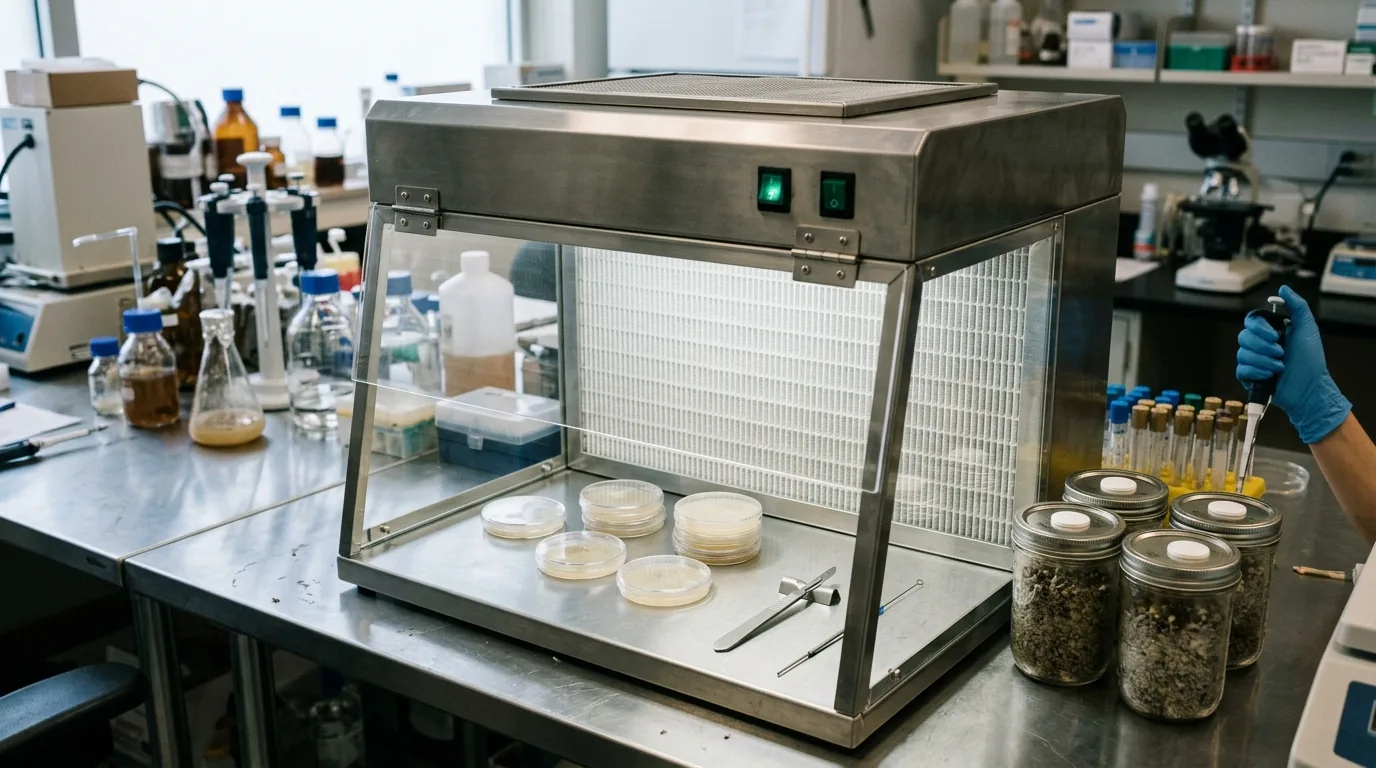
A laminar flow hood creates a horizontal stream of HEPA-filtered air (typically ULPA-grade for mycology) that moves from back to front across the work surface. This constant stream of clean air prevents particles from the room from reaching the work area.
How it works: A high-powered blower pulls room air through a pre-filter and then a HEPA (High Efficiency Particulate Air) filter, which captures 99.97% of particles 0.3 microns and larger. The filtered air moves in a smooth, laminar (non-turbulent) sheet across the work surface. Because the air is always moving toward you from the work surface, room particles cannot travel against this airflow into the sterile zone.
Types of flow hoods:
- Horizontal laminar flow hoods: Most common for mycology — air flows horizontally toward the operator. The entire work surface is in the clean zone.
- Vertical laminar flow hoods (biosafety cabinets): Air flows downward. Designed to protect the worker as well as the work — used in labs working with pathogens. Overkill for home cultivation; more expensive.
What to look for:
- HEPA filter rating: H14 or better preferred; ULPA preferred for spore-level work
- Fan/blower appropriate for the filter resistance
- Face velocity: 75-100 linear feet per minute measured at the face of the hood
- Pre-filter: protects the HEPA from large particles, extending its life
Commercial vs. DIY:
- Commercial: $400-1,000+ for desktop laminar flow hoods (Baker Company, Cleatech, various)
- DIY: Many cultivators build their own from a blower motor, HEPA filter, and wooden/metal housing. Budget $100-300 for parts. Quality depends heavily on build quality and filter specification.
Performance: A properly functioning laminar flow hood effectively eliminates environmental contamination as a factor. Contamination rates in a flow hood typically drop below 1% if technique is otherwise correct.
Cost: $200-1,000+ depending on approach.
Choosing Between SAB and Flow Hood
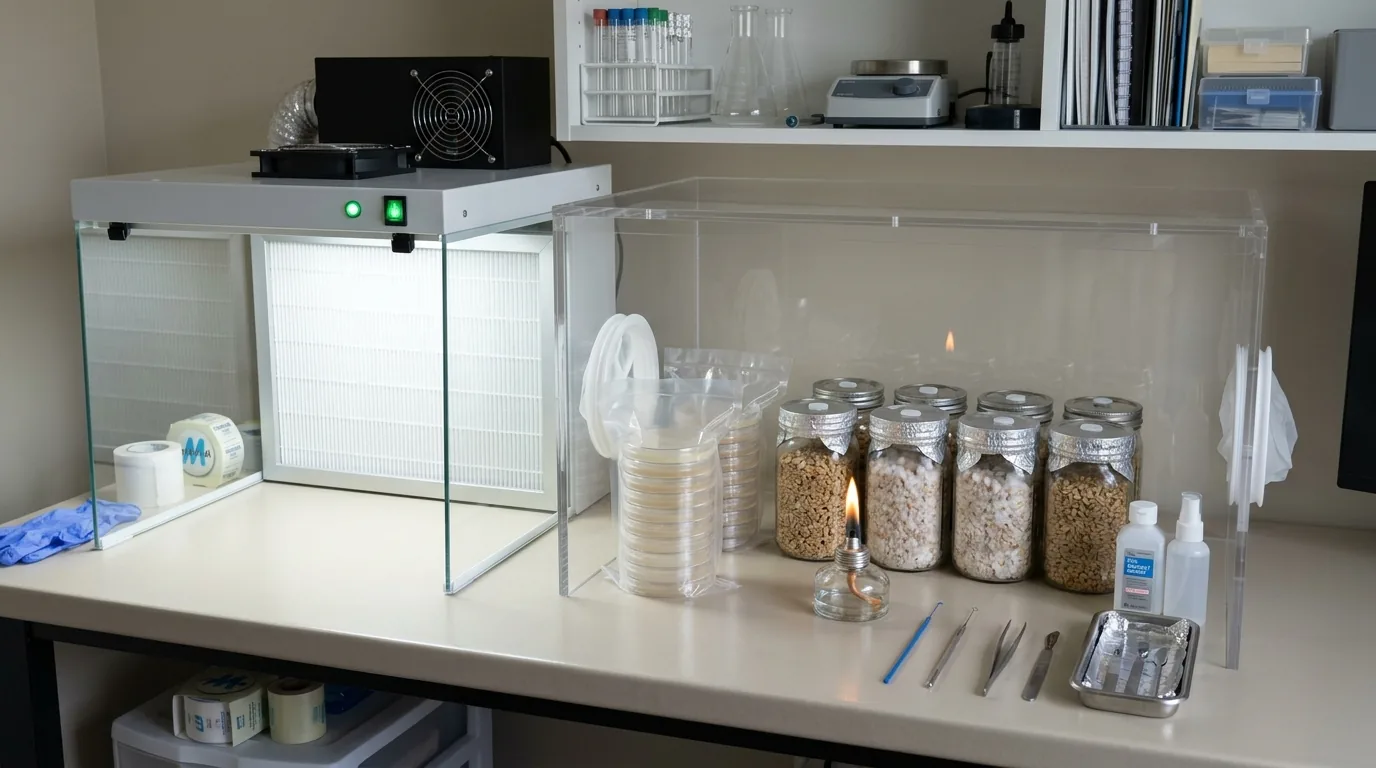
SAB is appropriate when:
- You are just starting out and learning the technique
- You are working with grain spawn and larger-scale inoculations where some contamination loss is acceptable
- Budget is a primary constraint
- Your home environment is relatively clean (low mold load, no pets, no carpet in the work area)
Flow hood is worth the investment when:
- You are doing agar work (cloning, isolation, transfers) where precision matters
- Contamination rates with your SAB are unacceptably high despite good technique
- You are producing spawn for sale or for large personal grows where contamination loss is expensive
- You want to work with more contamination-prone substrates
Most home cultivators start with an SAB and transition to a flow hood after they've outgrown it. The SAB experience also teaches good technique that makes the flow hood more effective.
Technique Is More Important Than Equipment
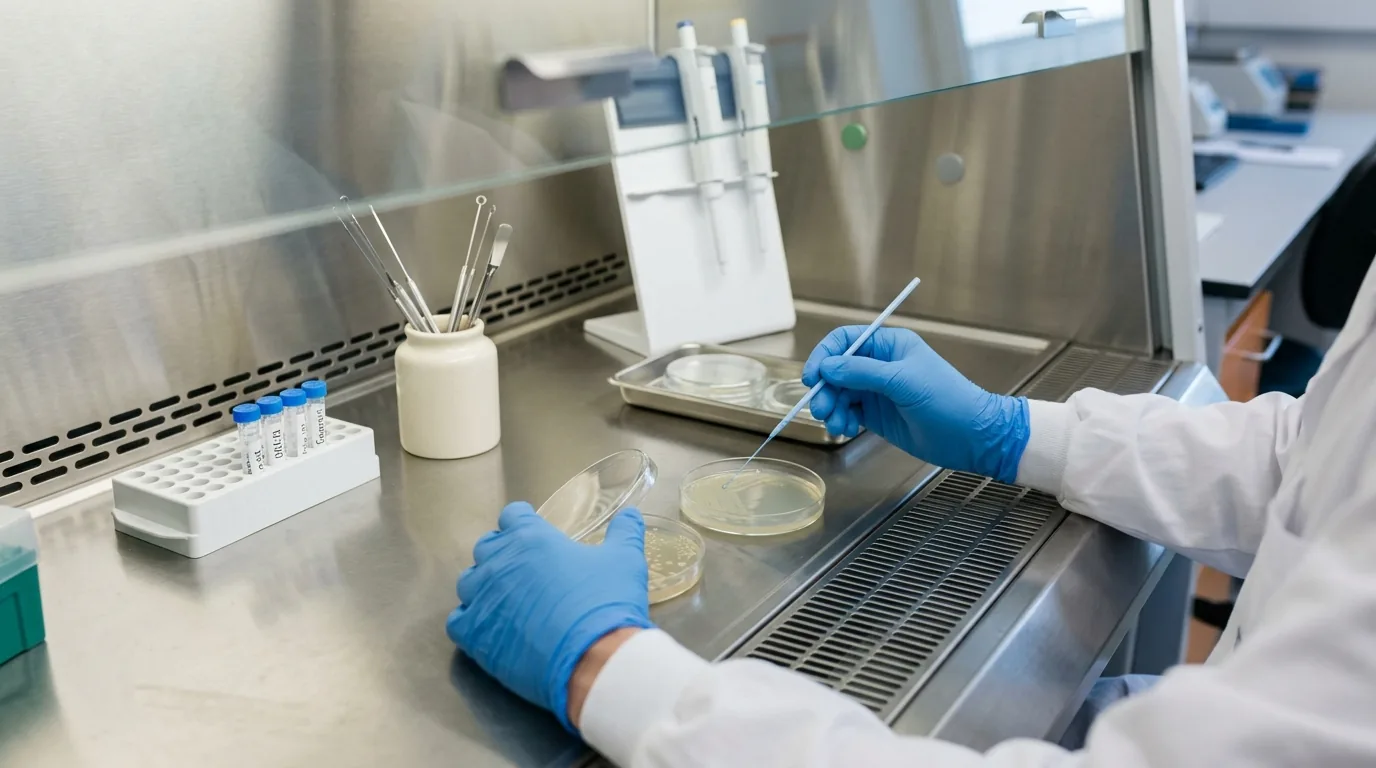
The most common mistake is assuming better equipment will compensate for poor technique. A flow hood used with sloppy technique will have higher contamination rates than an SAB used meticulously.
Universal technique rules:
- Wipe everything that enters the clean zone with 70% IPA
- Flame sterilize metal tools before each use
- Never speak, cough, or sneeze over open containers
- Work methodically and without rushing
- Clean the work surface between different substrates
In a flow hood, work directly in the airstream — not to the sides of the working area where turbulence increases. In an SAB, minimize arm movement to avoid creating currents.
The Syringe Alternative: Minimizing Exposure Time
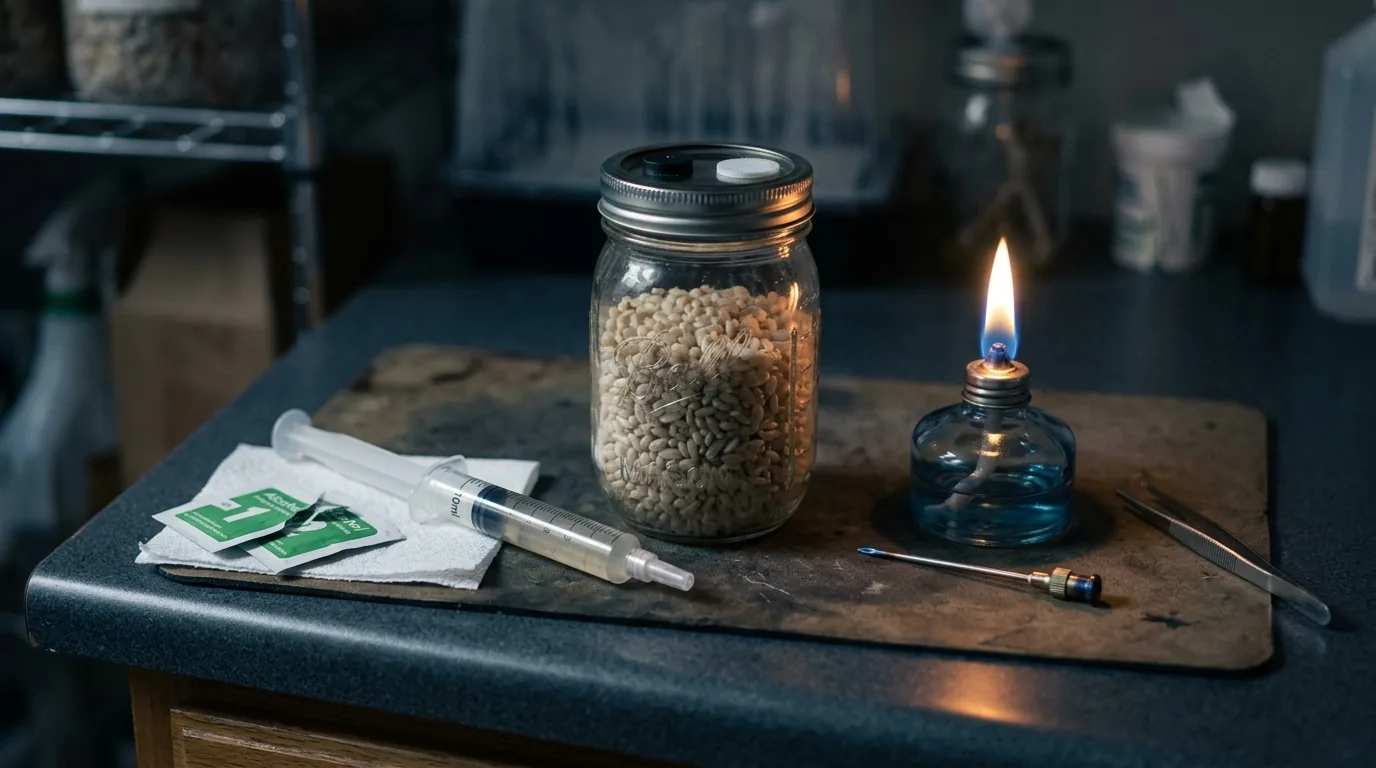
When using spore syringes (as opposed to agar transfers), the exposure window is very short — you're only opening the jar briefly to insert the needle through the injection port. This can be done successfully without any aseptic technique setup at all, as long as:
- You work quickly
- You flame-sterilize and cool the needle
- You inject through a self-healing silicone port rather than directly into the lid
- You inoculate in a clean room away from air vents, open windows, and pets
For spore syringe work, the SAB adds margin but is not strictly required for many cultivators. For agar work, aseptic technique is non-negotiable.
Common Problems & Troubleshooting
See the Contamination Guide for common issues.
Tips for Success
Take notes at every stage. Consistency beats perfection.