Liquid Culture: Inoculation and Storage
Everything you need to know about Liquid Culture: Inoculation and Storage — from materials to first harvest.
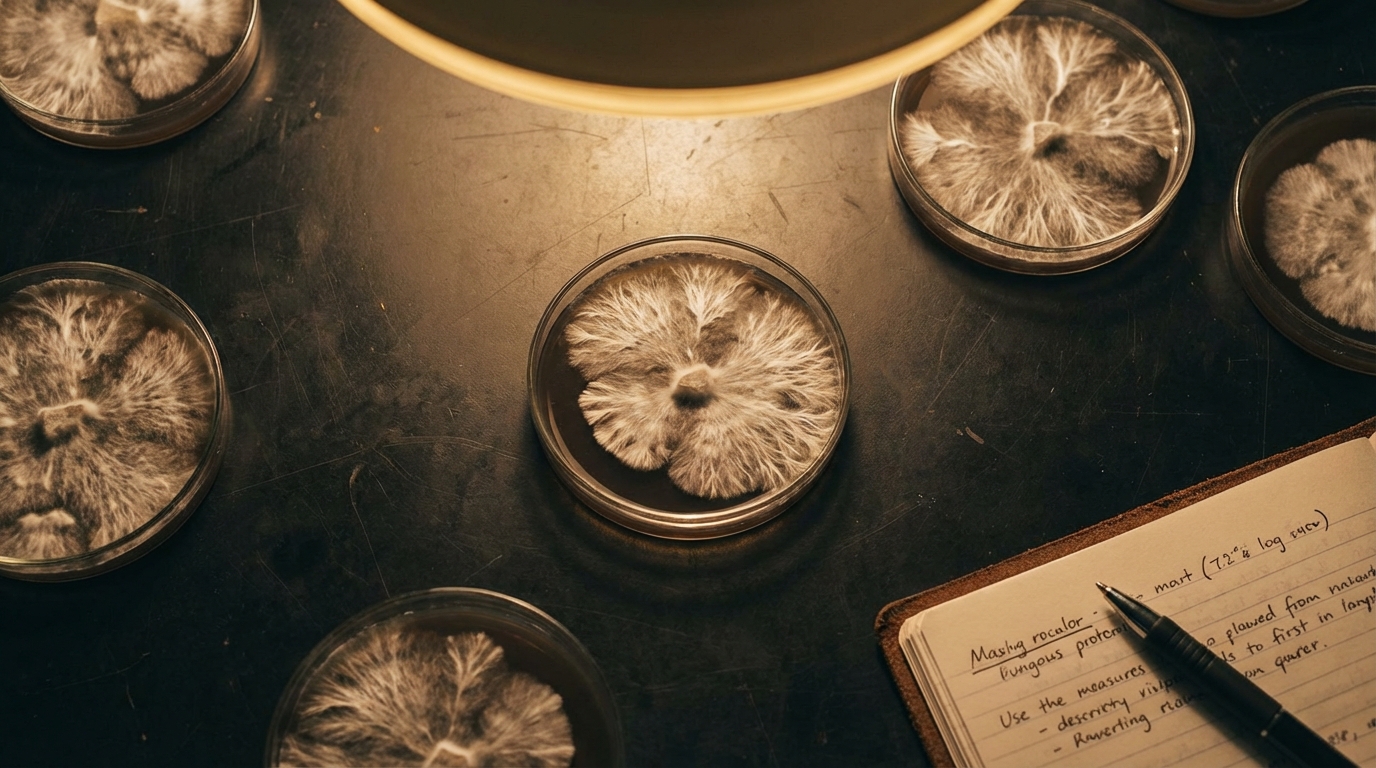
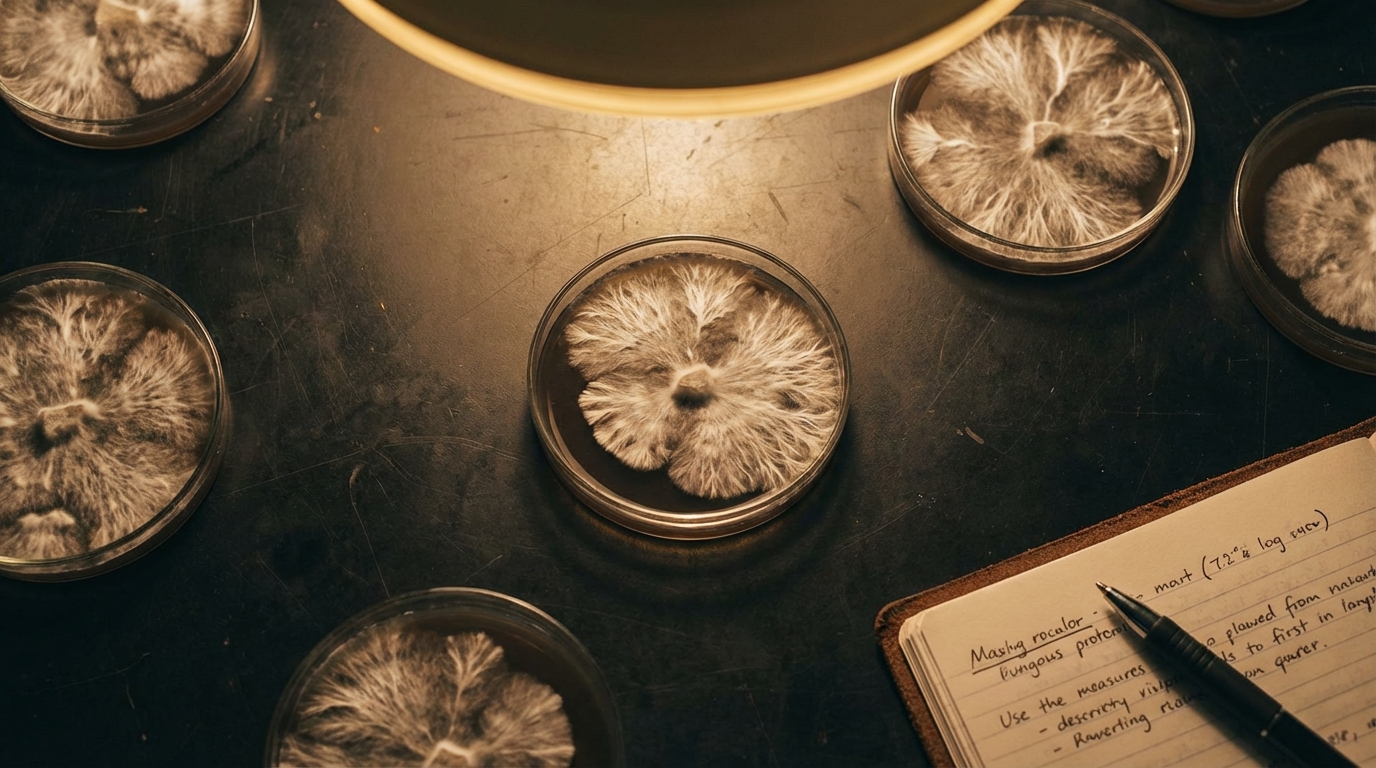
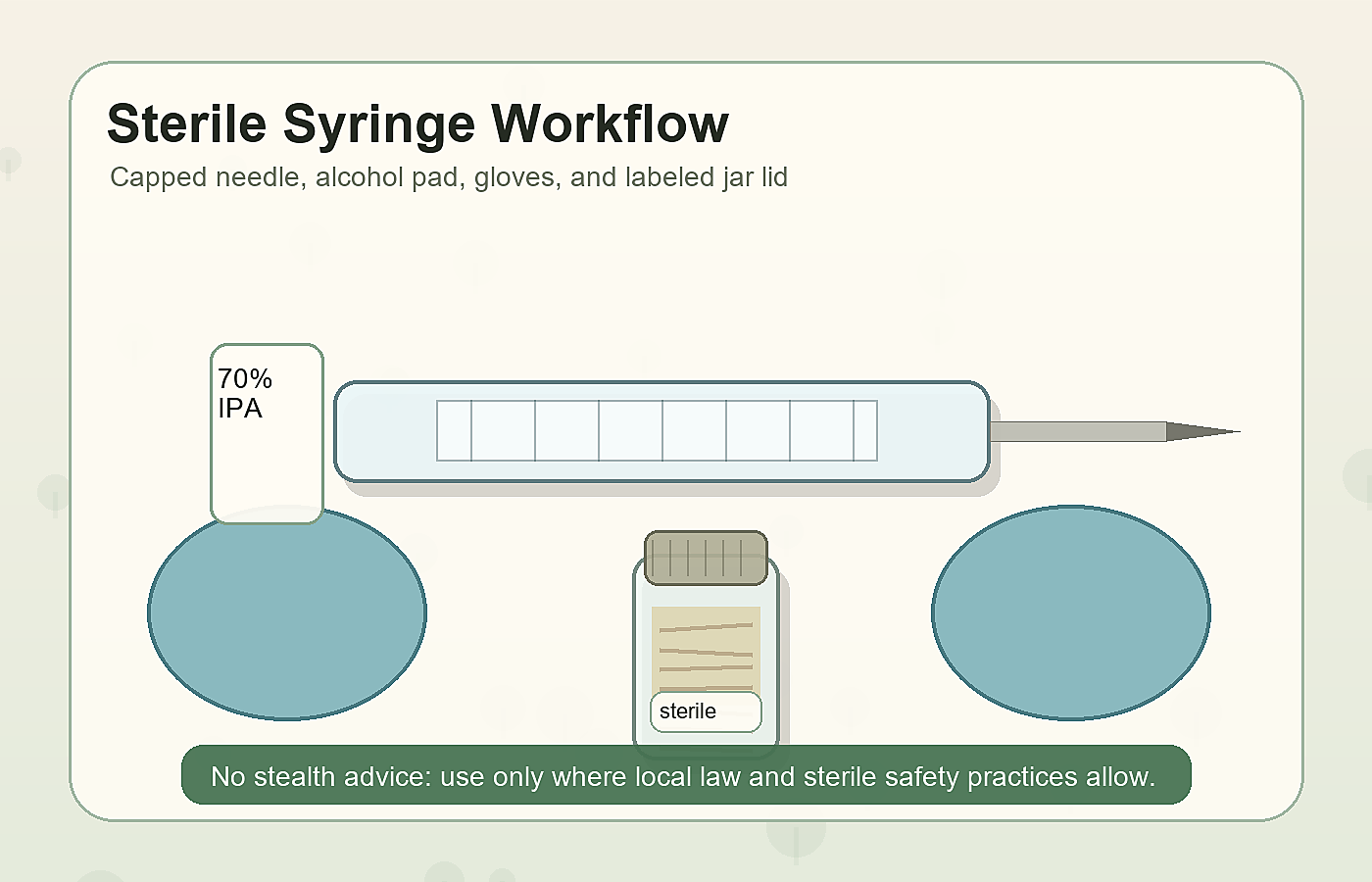
What You'll Need
- See full supply list in guide below.
Find grow supplies at vendors in our Directory.
Step-by-Step Process
Liquid Culture: Inoculation and Storage
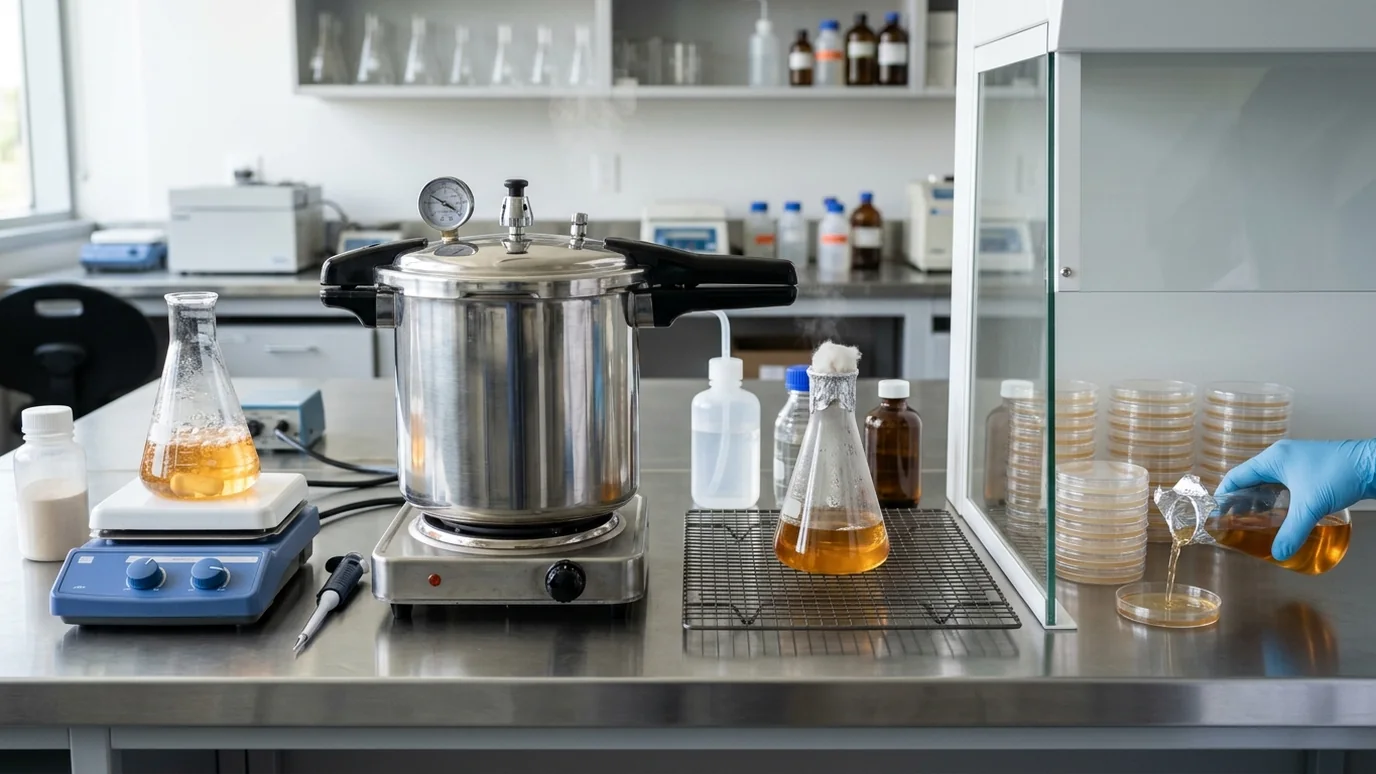
Liquid culture (LC) is a solution of water and simple sugars in which mycelium grows in suspension. It provides the fastest and most reliable method of inoculating grain jars, allows indefinite storage of genetic lines, and is far more economical than spore syringes for ongoing cultivation.
What Is Liquid Culture?
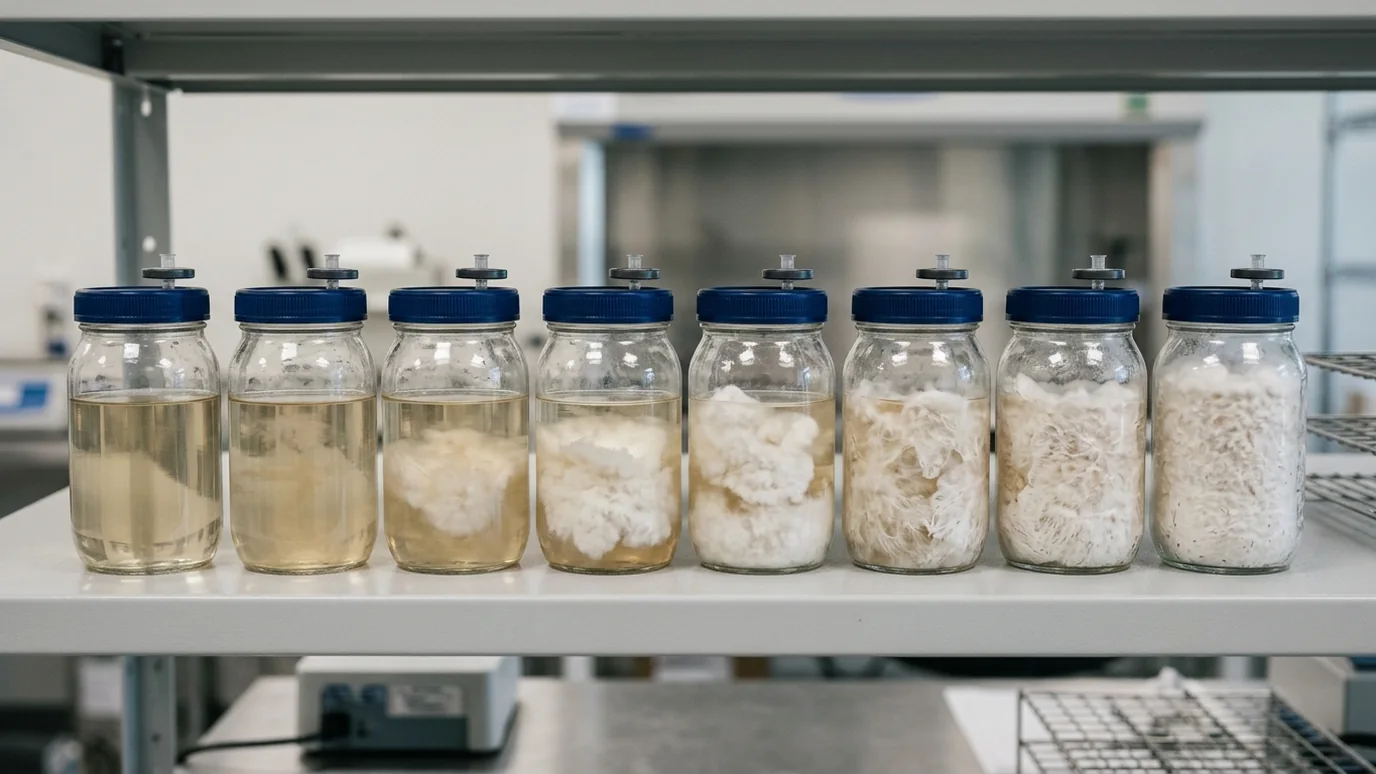
Liquid culture contains:
- Sterile nutrient solution: Water with dissolved sugars (typically honey, light corn syrup, or malt extract at 2-4% concentration)
- Mycelium: Active, living mycelium growing in the solution
Unlike spore syringes (which require the mycelium to germinate from spores), LC contains already-established mycelium. This means:
- Faster colonization of grain (typically 50-70% faster than spore syringes)
- Confirmed genetics — you know what's in the LC because you grew it
- No germination variability
Creating a Liquid Culture
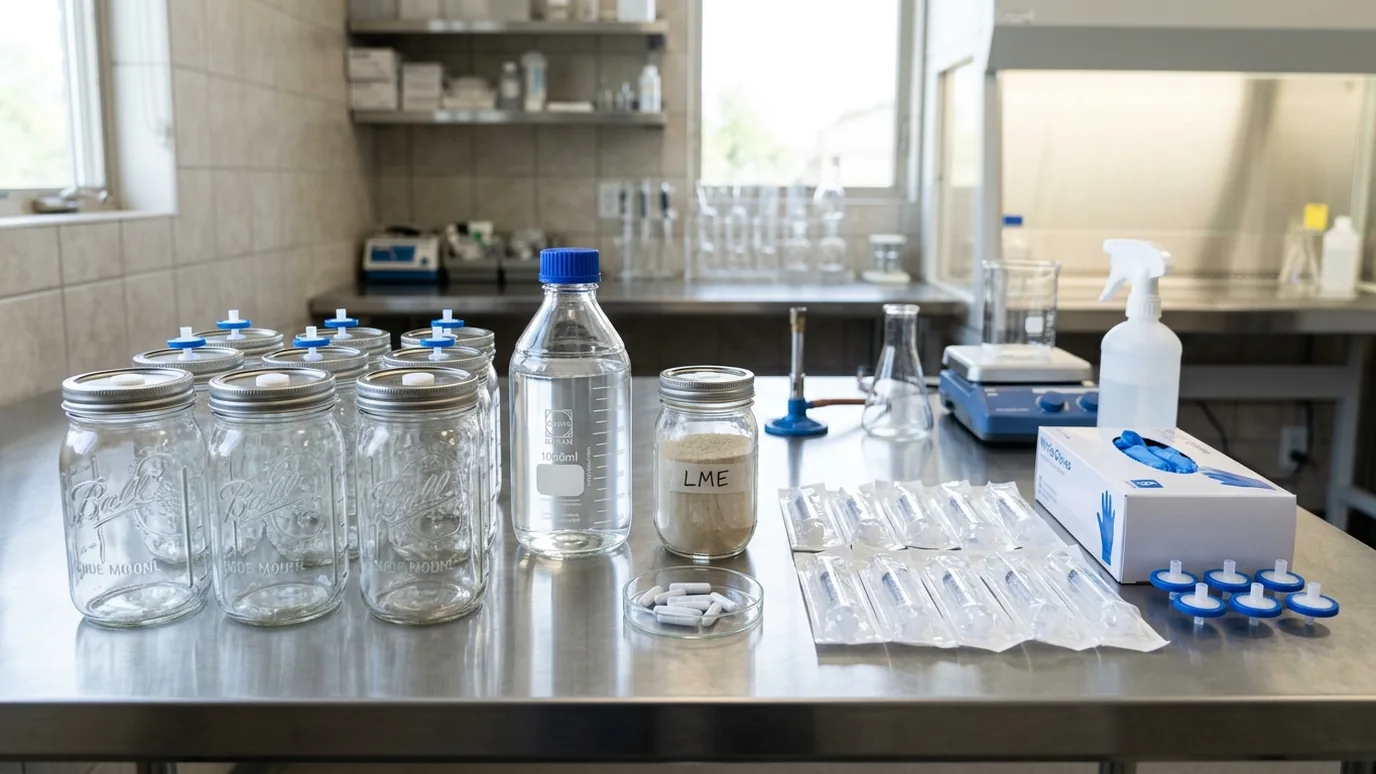
Recipe
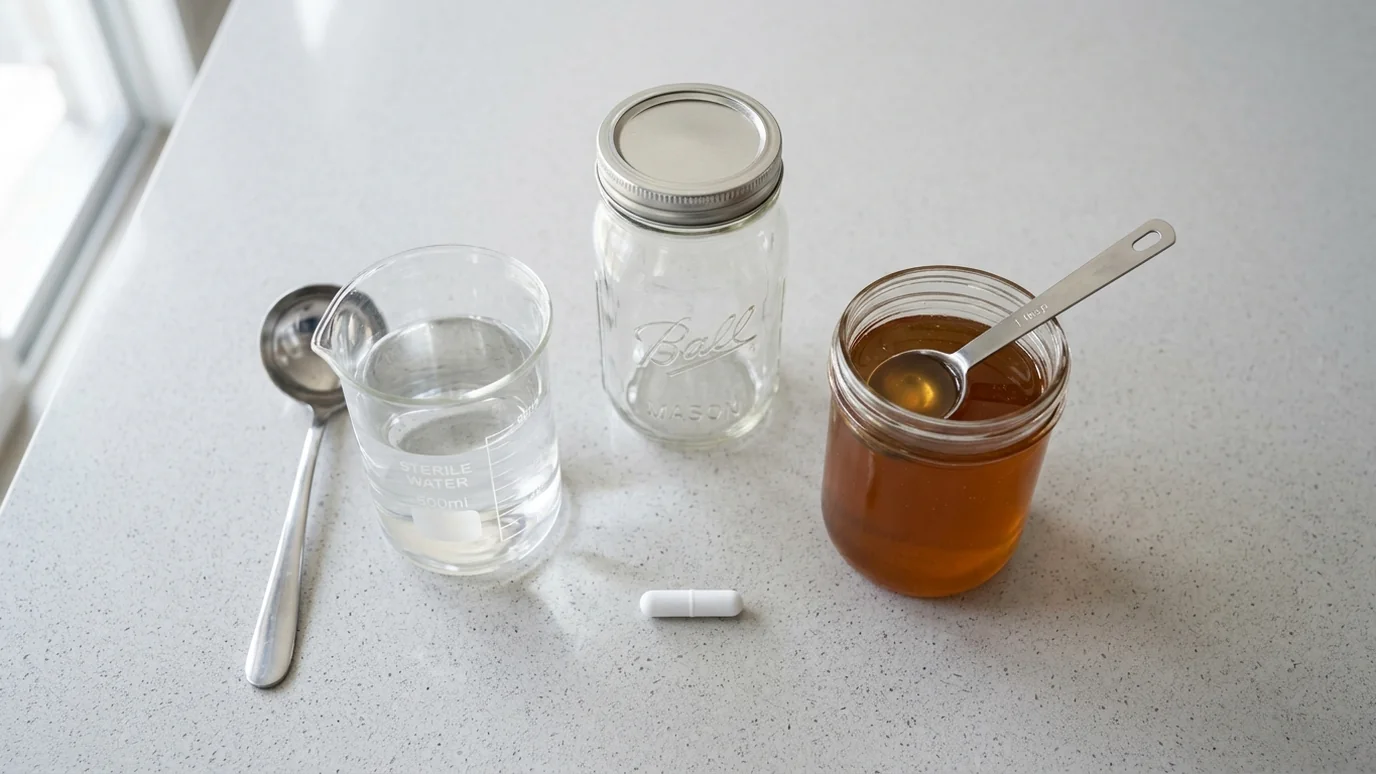
Honey LC (most common, beginner-friendly):
- 500ml water
- 1 tablespoon raw honey (or light corn syrup)
- 1/4 tsp gypsum (optional — prevents clumping)
Dissolve honey in water. No heat required. Load into a mason jar with modified lid (injection port and filter). Pressure cook at 15 PSI for 30-45 minutes. Allow to cool.
Inoculation of the LC
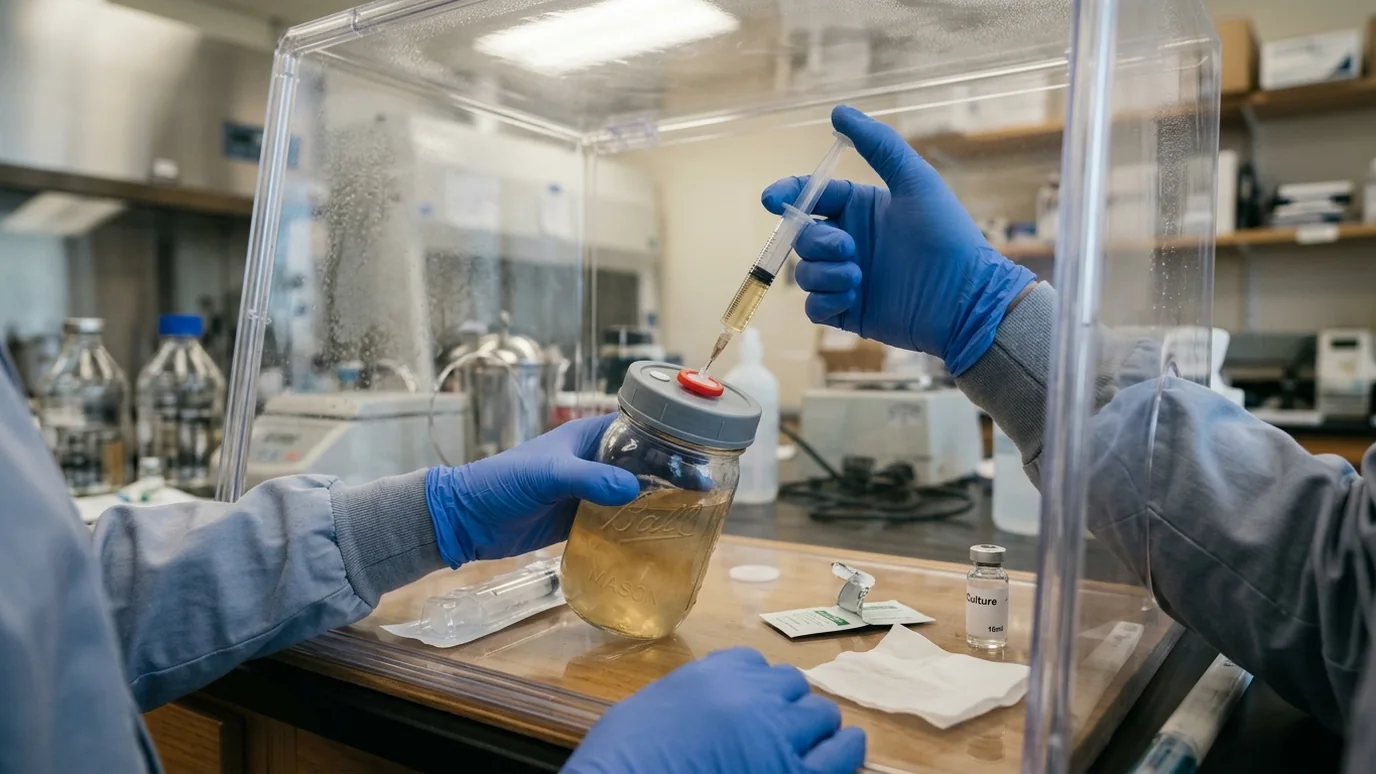
Once cooled, inoculate with:
- A wedge cut from a clean agar plate
- Grain spawn (small amount)
- Spore syringe (creates LC from spores — takes longer to establish)
Growth
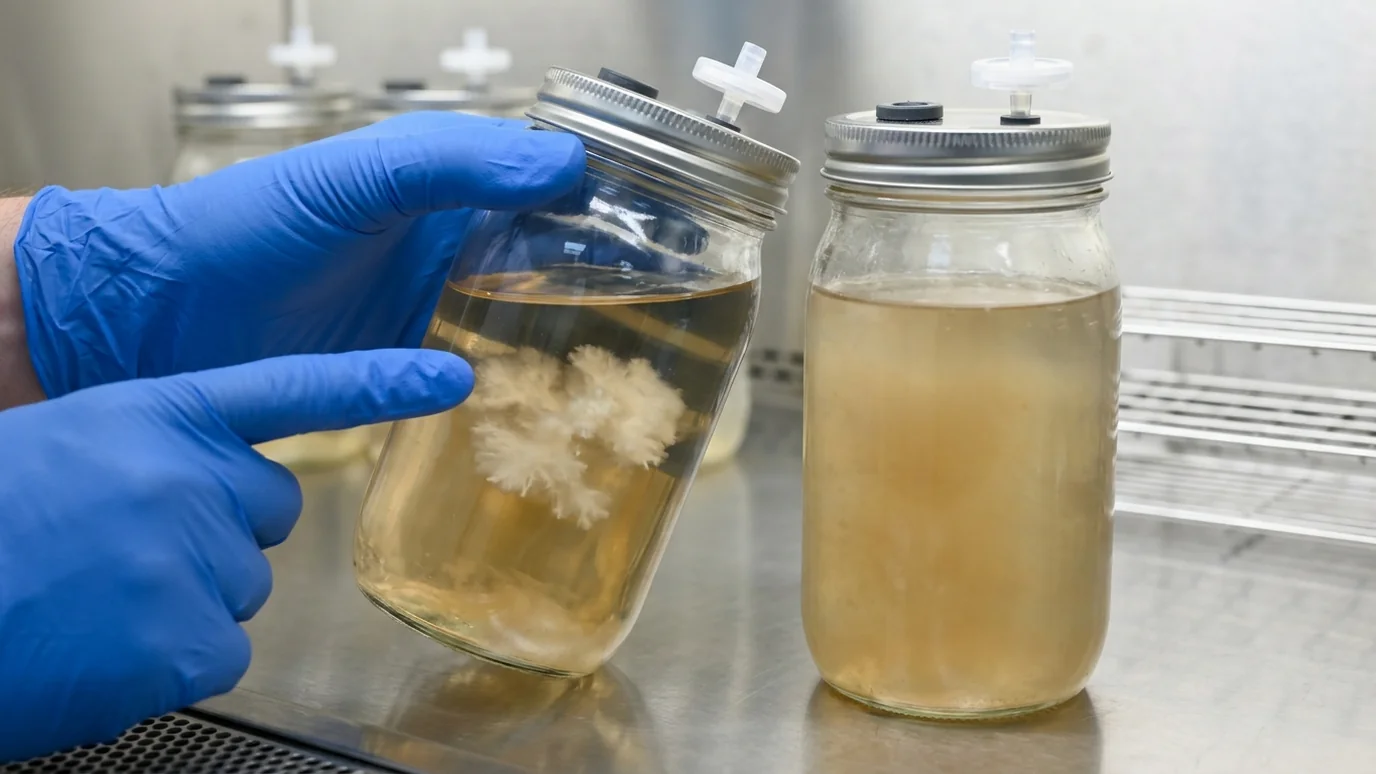
Mycelium will develop in the LC over 5-14 days depending on starting material:
- Agar transfer → established in 7-10 days
- Grain spawn → 5-7 days
- Spore syringe → 10-21 days
Swirl the jar gently once daily to oxygenate and distribute growth.
Identifying Healthy vs. Contaminated LC
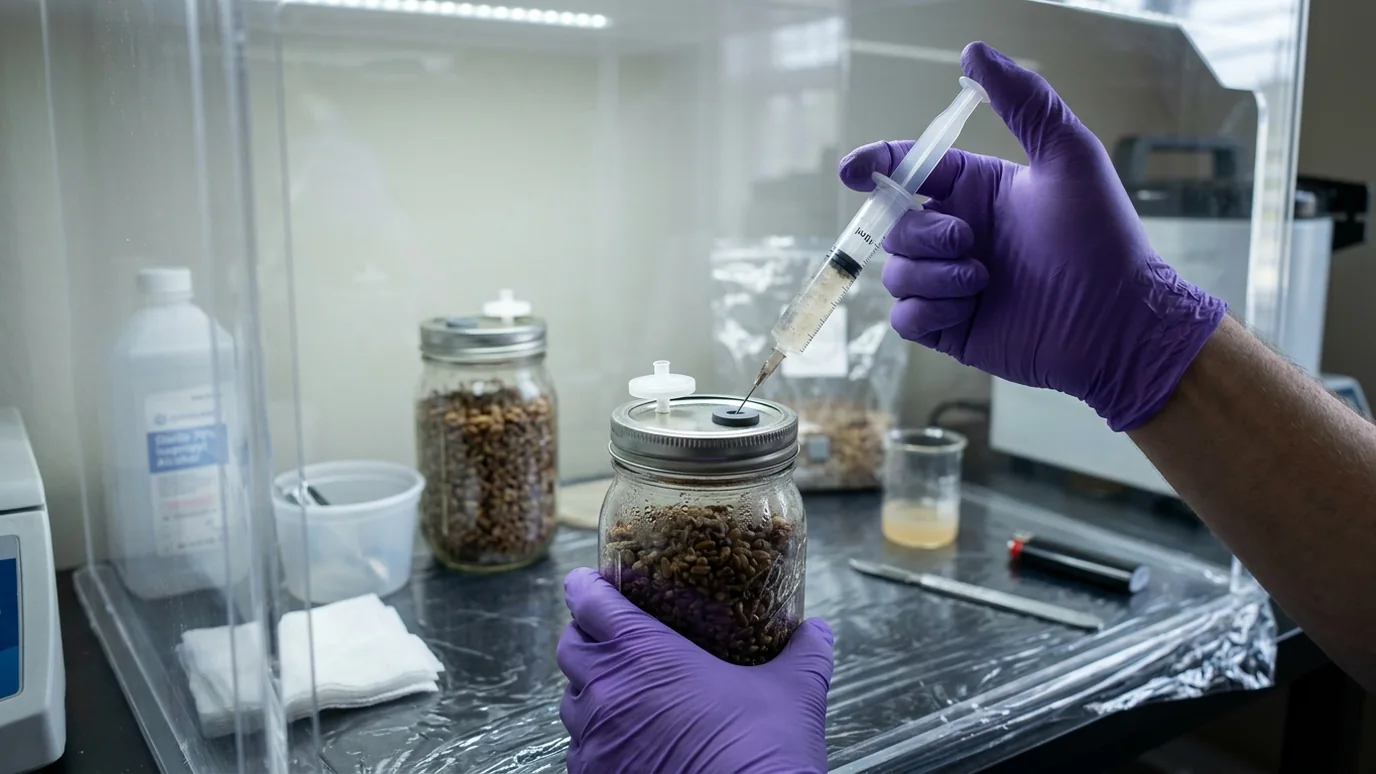
Healthy LC: Clear or slightly cloudy solution; white mycelium strands or fluffy masses; no unusual color; smells clean or faintly mushroomy
Contaminated LC:
- Yellow, green, pink, or black coloration
- Sour, fermented, or foul smell
- Bacterial contamination appears as cloudiness with no visible mycelium strands
Contaminated LC must be discarded. Do not open it inside your growing area.
Storage
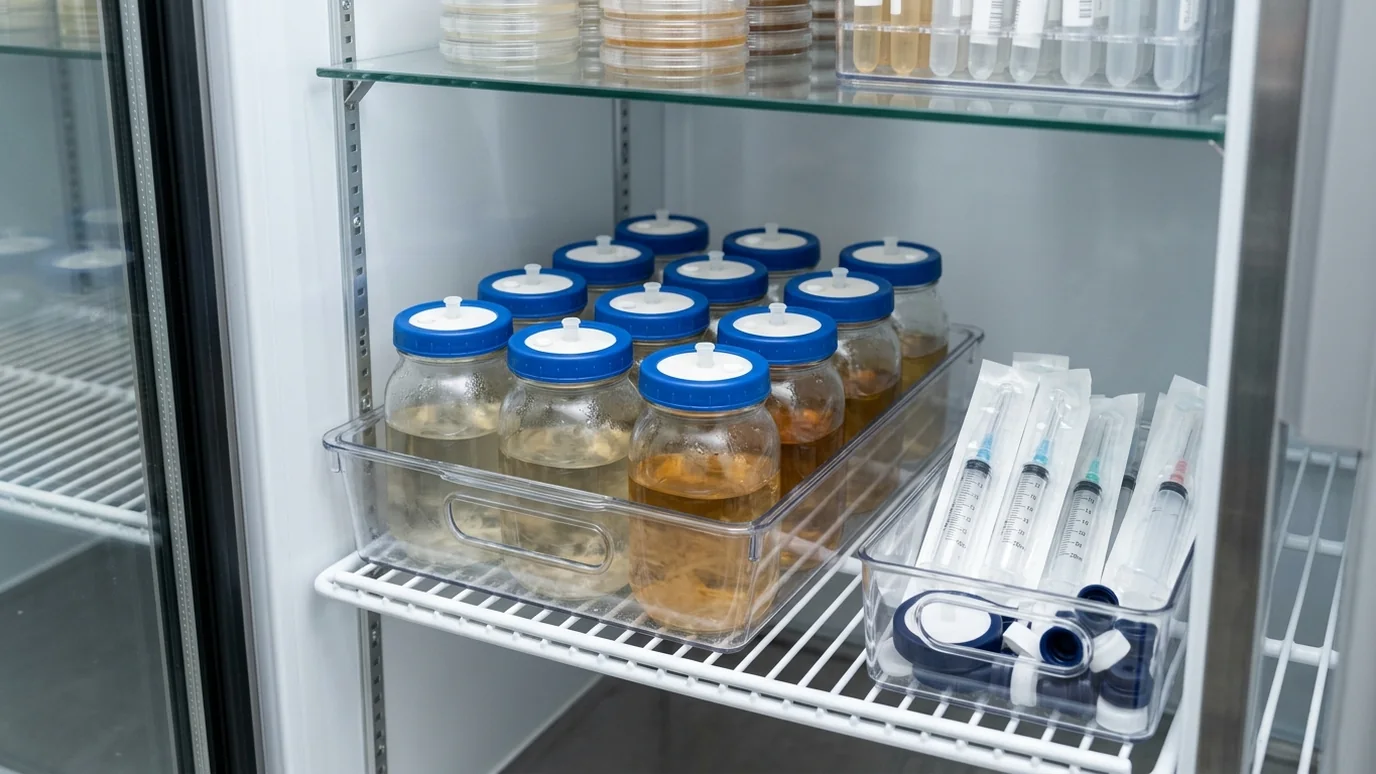
Short-term (1-4 weeks): Refrigerator. Mycelium goes dormant but remains viable. Bring to room temperature and swirl before use.
Long-term (months to years): Several methods:
- Agar storage: Transfer LC to agar plates; store plates in sealed bags at refrigerator temperature. Most reliable long-term storage.
- Glycerol stocks (freezing): Add 20-30% food-grade glycerol, freeze at -80°F for indefinite storage. Requires a deep freezer.
- Refrigerated LC: Most strains maintain viability for 4-6 months refrigerated; some decline faster.
For home cultivators maintaining a genetic library, regular agar transfers (every 2-4 months) are the most practical approach.
Using LC to Inoculate Grain
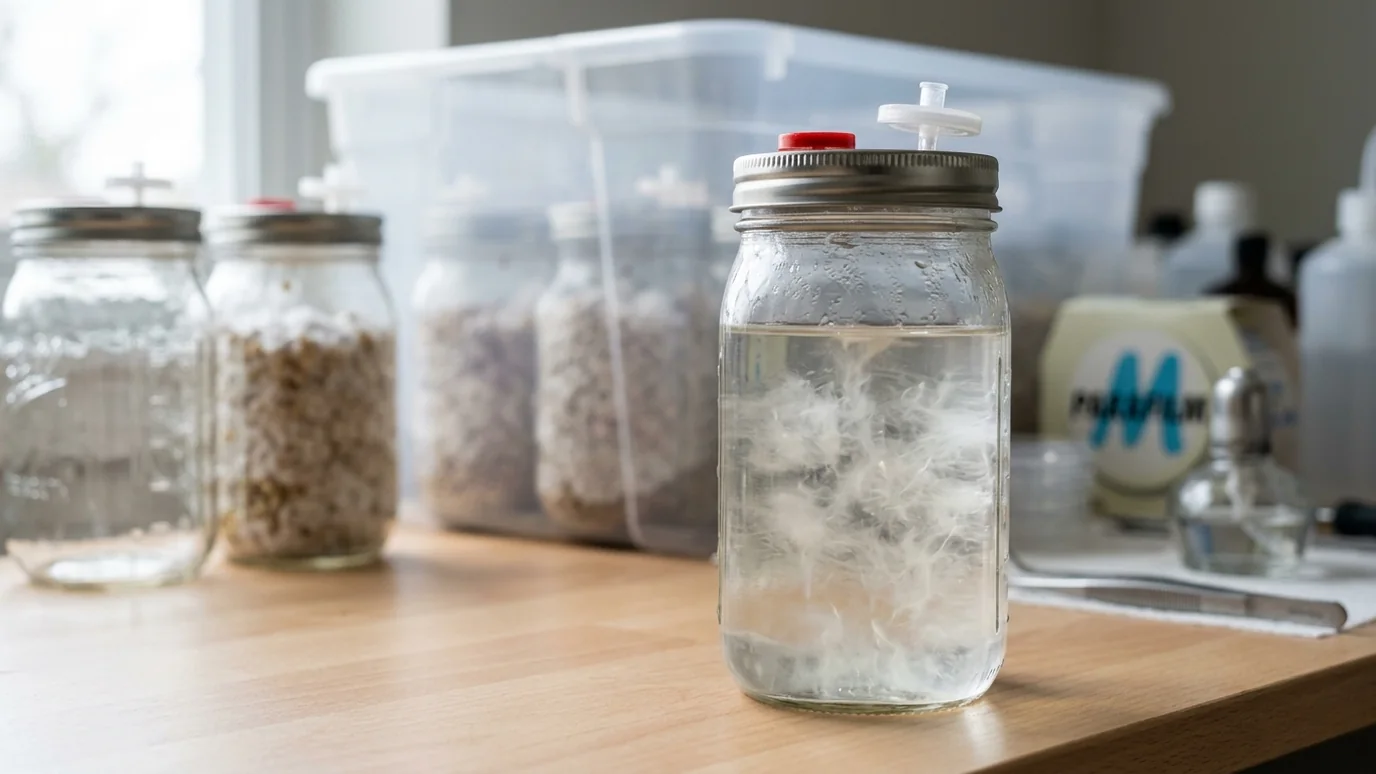
- Flame-sterilize syringe needle, let cool
- Draw up 3-5ml LC from jar via injection port
- Working in still air box or flow hood: inject through grain jar port (2-3ml per half-pint jar)
- Shake jar to distribute inoculant
- Store at 75-80°F for colonization
LC-inoculated grain colonizes noticeably faster than spore-inoculated grain — expect visible mycelium by day 3-5 (vs. 7-10 for spore syringes).
Magnetic Stir Plate (Optional)
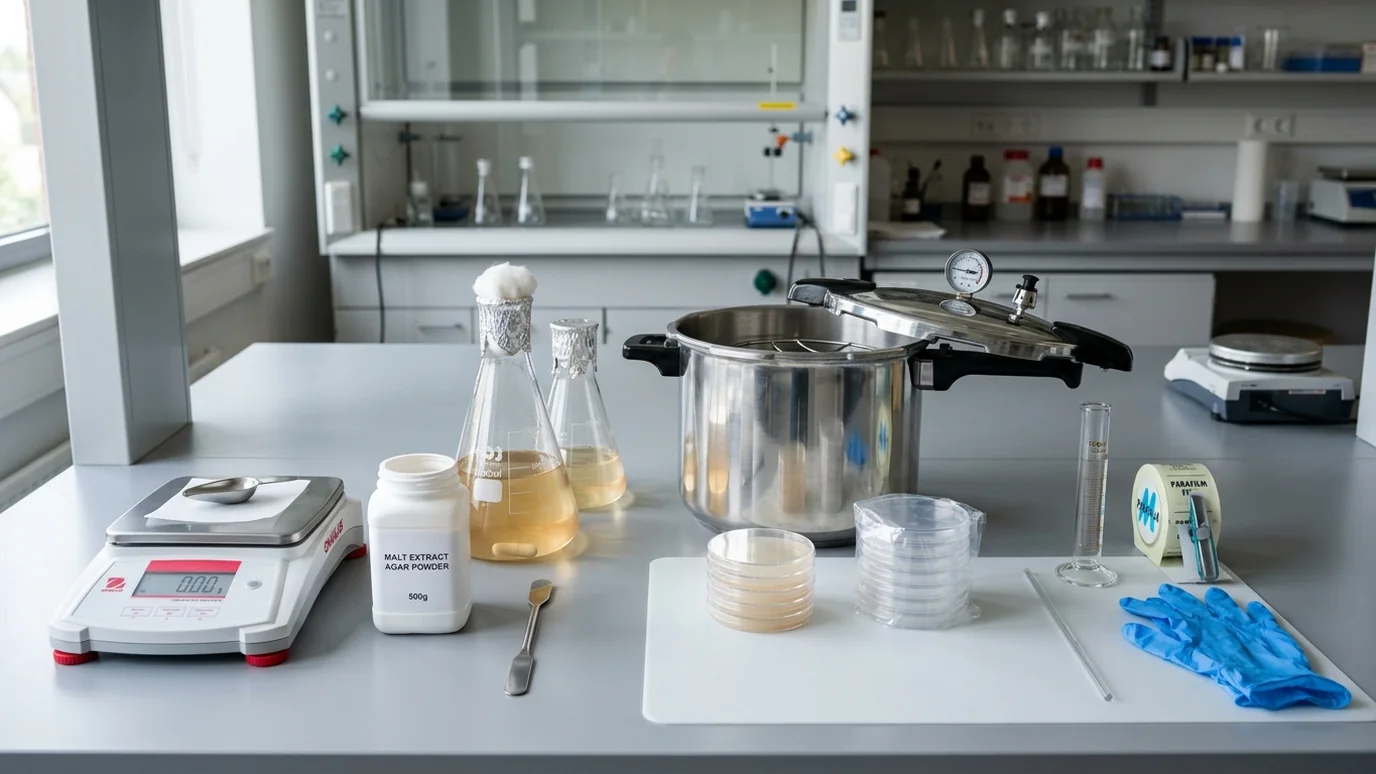
For advanced LC work, a magnetic stir plate keeps the culture continuously agitated, providing better oxygenation and more homogeneous growth. This allows you to pull smaller, more uniform aliquots for inoculation. Not required for basic LC production.
Building a Genetic Library
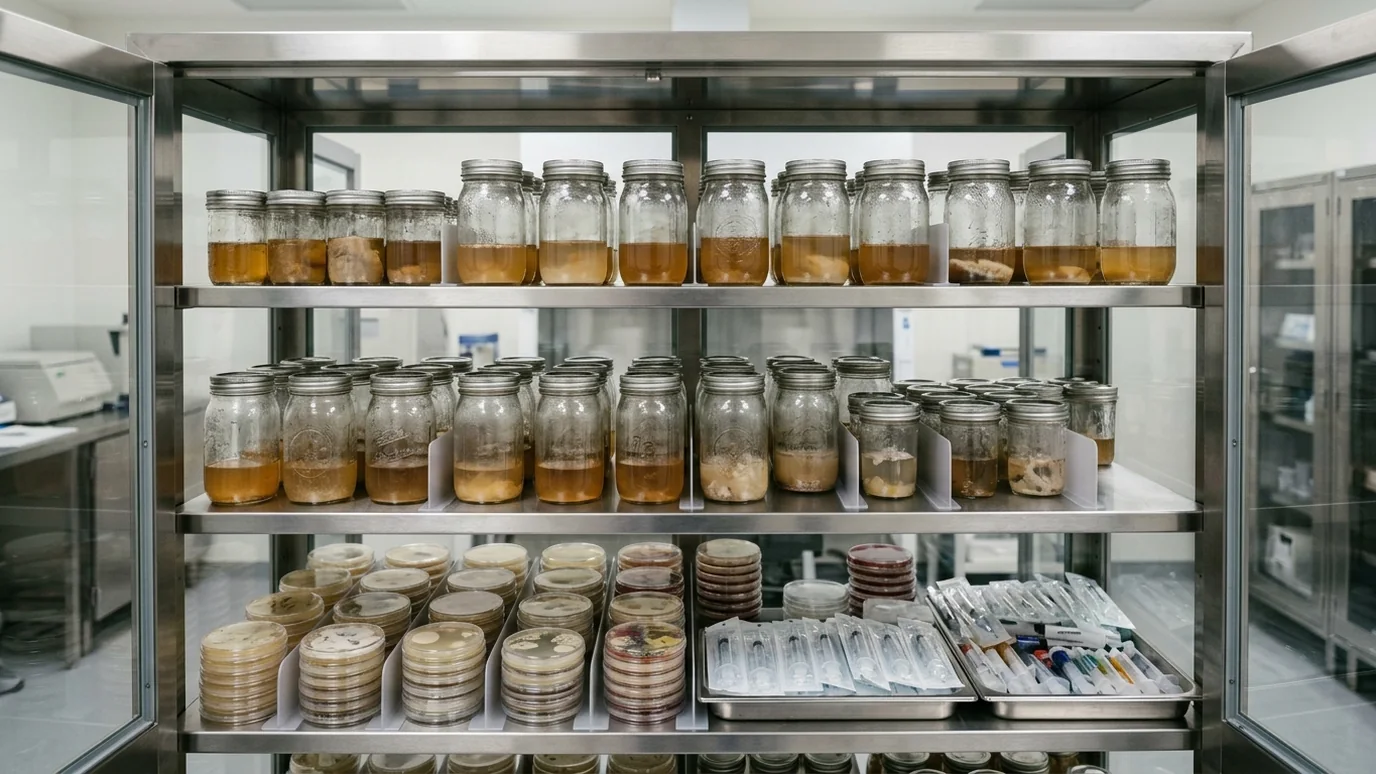
LC is the backbone of a serious cultivation genetic library. Once you have established LC of strains you value:
- Maintain on agar as backup
- Keep refrigerated LC for active use
- When a strain demonstrates exceptional fruiting, clone from mushroom tissue to agar, transfer to LC, add to library
Common Problems & Troubleshooting
See the Contamination Guide for common issues.
Tips for Success
Take notes at every stage. Consistency beats perfection.