Set and Setting: Preparing Your Mind and Space
'Set and setting' — coined by Timothy Leary in the 1960s and now deeply embedded in both research and harm reduction frameworks — refers to the two primary contextual variables in any psychedelic experience: mindset (set) and environment (setting)...
Set and Setting: Preparing Your Mind and Space
"Set and setting" — coined by Timothy Leary in the 1960s and now deeply embedded in both research and harm reduction frameworks — refers to the two primary contextual variables in any psychedelic experience: mindset (set) and environment (setting). Research and accumulated experience consistently show that these factors influence the character, difficulty, and outcome of a psilocybin session more than almost any other variable except dose. Preparing both intentionally is among the most important practical steps anyone can take before a session.
Set: Mindset Preparation
What "Set" Actually Means
Set is not just your mood on the day of the session. It encompasses your current psychological state, your relationship to the experience, your intentions, your unresolved fears, your background assumptions, and your broader life context at the time of the session.
You cannot fully control your set — emotions, unresolved conflicts, and psychological material will surface regardless of how well you prepare. But you can work with set intentionally to reduce unnecessary anxiety, clarify your purpose, and approach the experience with more openness.
Intention Setting
An intention is a direction for the session — not a goal, not a demand, and not a prediction. It says: "this is what I'd like the experience to be in service of." Setting an intention does several things:
- Gives the session something to work with, reducing the frequency of sessions that feel aimless or random
- Provides an anchor to return to when the experience becomes disorienting
- Creates a frame for integration: what changed relative to the intention?
How to set an intention:
Start by asking honestly: why am I doing this session? What would I most want to address, understand, or experience? Write several possibilities, then let them settle. An effective intention is honest and personal, not aspirational ("I want to become enlightened") or vague ("I want to feel better"). Examples of workable intentions:
- "I want to understand why I keep avoiding intimacy"
- "I want to process the grief I've been carrying since my father died"
- "I want to experience what's beneath my chronic anxiety"
- "I want to reconnect with a sense of meaning in my life"
You don't need a problem to work on — an intention can also be appreciative or exploratory: "I want to see what arises" is a valid direction for experienced users who don't have a specific agenda.
Clearing the Pre-Session Period
The days before a session are part of the set preparation. Ideally:
3-7 days before:
- Reduce or eliminate alcohol (alcohol disrupts sleep architecture and baseline mood in ways that affect the session)
- Maintain or improve sleep quality
- Reduce high-stimulation media, news, and social engagement if possible
- Spend time in nature or in quiet reflection
- Journal about your intentions and what you're bringing to the session
The day before:
- Light diet — avoid heavy, processed, or late meals
- Avoid cannabis (can increase anxiety in the lead-up to an experience that already requires psychological openness)
- Spend time in activities that feel grounding and meaningful
The morning of:
- Light or no breakfast (fasting 4 hours before enhances absorption and reduces nausea)
- Gentle movement — walking, yoga, stretching
- Review your intention
- Spend a few minutes in quiet reflection or meditation
Working With Anxiety
Pre-session anxiety is common and not necessarily a problem. Moderate anxiety indicates you're taking the experience seriously and have some awareness of its significance. It becomes a problem when it's severe enough to:
- Make surrender difficult during the session
- Cause you to rush preparation
- Drive the session toward a challenging experience
If anxiety is significant, additional preparation is warranted:
- More thorough work with a therapist or guide
- Additional integration of intentions
- Considering a lower dose for this session
- Ensuring your setting and support are airtight
Unfinished Business
Unresolved conflict — with yourself or others — tends to surface during psilocybin sessions. This is not always a problem; processing unfinished business is part of what psilocybin offers. But going into a session with major active conflict (an unresolved fight, pending decision, acute stress) without acknowledging this as likely session material is a common oversight.
If there is significant unfinished business, consider: Can it be addressed before the session? If not, can it be named explicitly in your intention, so it's anticipated rather than surprising?
Setting: Environmental Preparation
The Core Principle
Setting means the physical and social environment in which the session occurs. The fundamental principle: the setting should support whatever the session needs to do — which may include difficult emotions, unusual perceptions, physical vulnerability, and complete surrender of ordinary cognitive control.
Settings that feel safe, comfortable, and controllable in ordinary consciousness take on amplified significance under psilocybin. A slightly uncomfortable chair becomes very uncomfortable. A street sound becomes distracting. A room with warm, soft light becomes beautiful. Preparation matters.
The Physical Space
Indoors vs. outdoors: Both work. Indoor settings offer control, privacy, weather independence, and proximity to support. Outdoor settings offer contact with the living world, natural light, and experiences of connection with nature that indoor settings can't replicate. Outdoor sessions require more safety planning (a sitter who remains present, clear geographical boundaries, weather contingency, fall risk management during peak effects).
Temperature: Slightly warm is better than cool. Temperature perception changes under psilocybin; many people feel temperature more intensely. Have layers available.
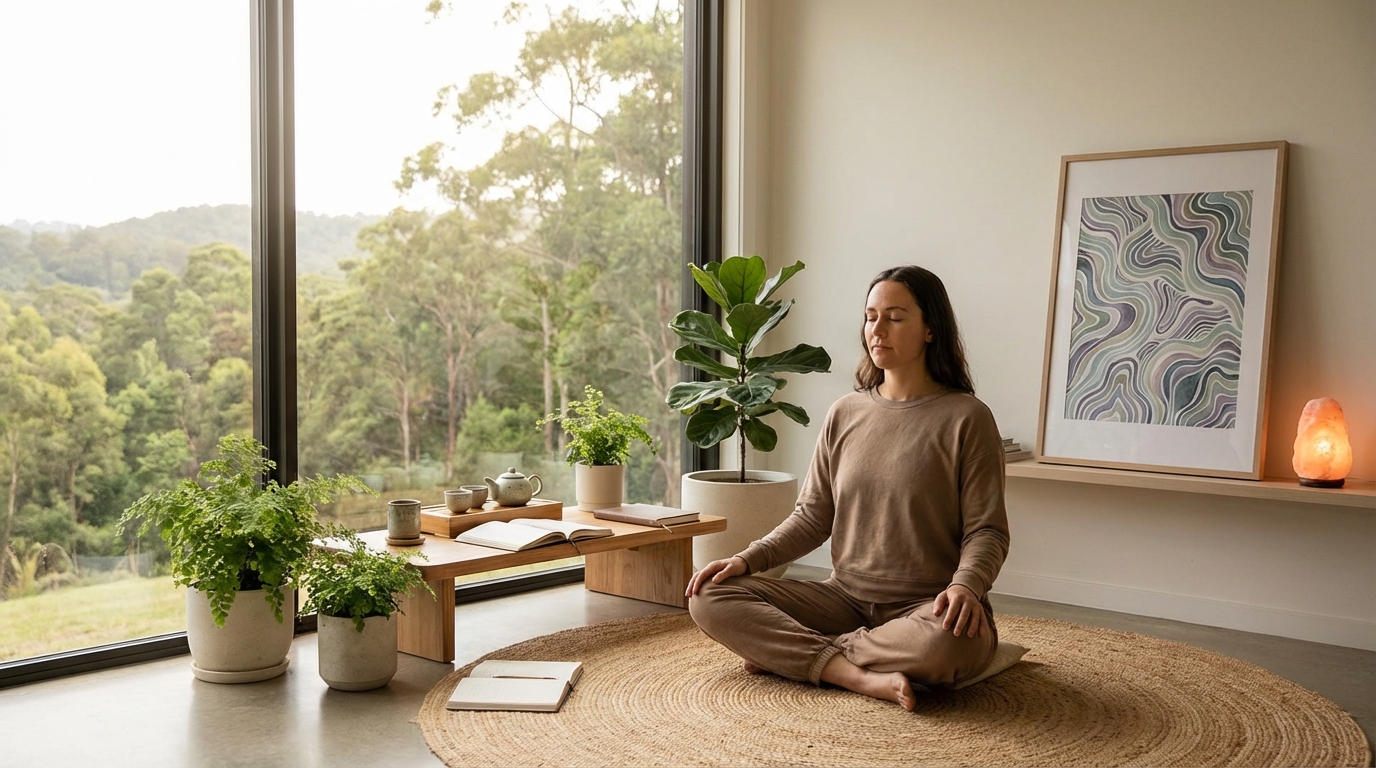
Lighting: Avoid harsh or fluorescent lighting. Natural light is ideal; warm-toned lamps, candles, and string lights work well. The ability to dim lights during the peak is valuable.
Clutter: A clean, uncluttered space reduces visual complexity that can become overwhelming. This doesn't need to be minimalist — meaningful objects, natural materials, and art are appropriate — but chaos in the physical environment can contribute to chaos in the experience.
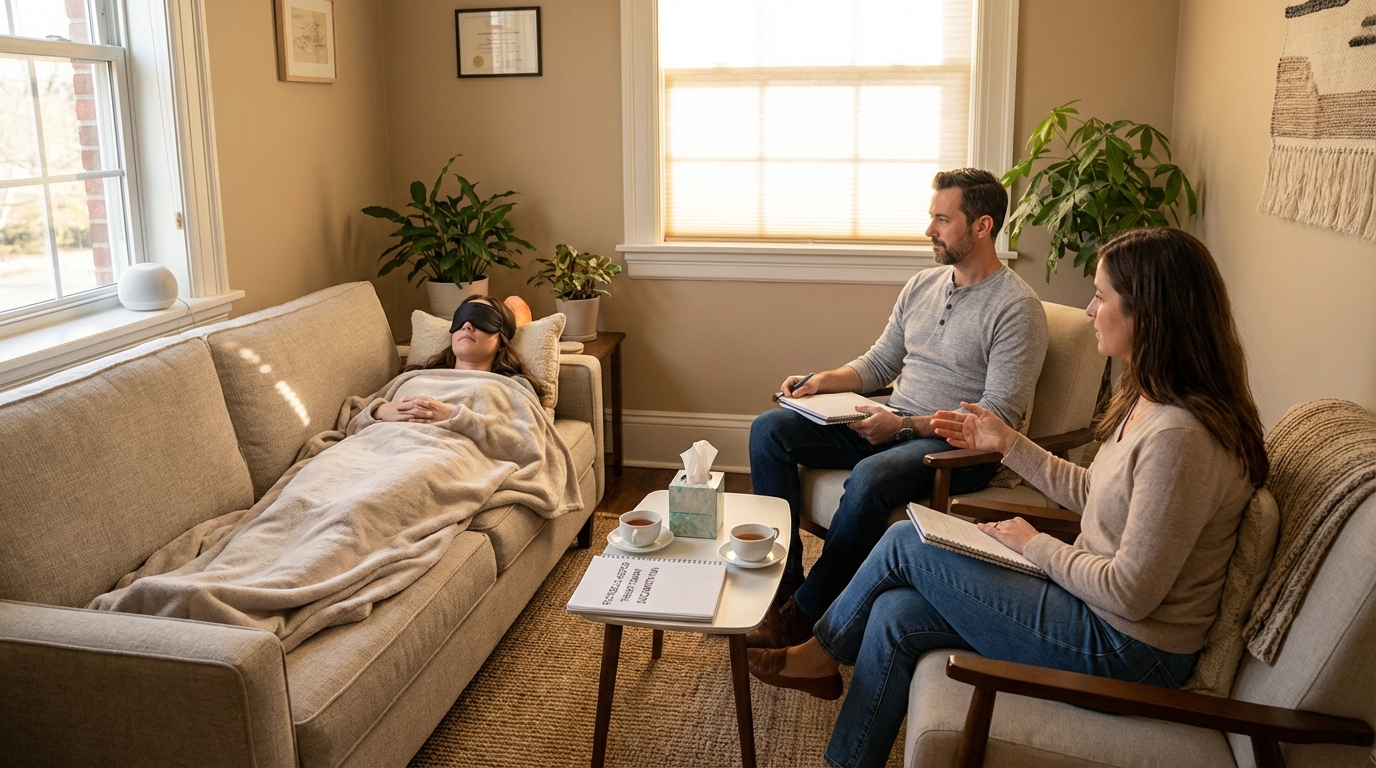
Comfort: A bed, mattress, or quality couch for lying down during peak effects. Blankets and pillows. If using eyeshades (which many clinical protocols recommend for parts of the experience), ensure comfortable lying positions. A comfortable chair for the periods when you want to sit upright.
Nature elements: Plants, flowers, water features, natural materials — these become potent and often beautiful during the session. A single vase of flowers can be a profound focus.
The bathroom: Know exactly where the bathroom is and ensure the path is clear and safe. Nausea is common in the first hour; urgency can arise without much warning.
The Social Environment
Alone: Solo sessions are higher risk and require experience. If you're going to session alone, it should be because you've been through enough sessions with support to know your patterns, and you've made appropriate safety provisions (a check-in person who knows where you are and when to expect contact).
With a sitter: A trusted, sober person who is not participating. The sitter doesn't need to guide — their role is to be present, to provide reassurance if needed, and to manage any practical needs (music, water, bathroom assistance if needed). Choose someone you trust deeply and who understands what they're agreeing to.
With a professional guide or therapist: The most supported and structured option. Guides and therapists bring training in how to support challenging experiences, when to intervene and when to allow the process, and how to facilitate integration.
Group sessions: Can provide a powerful shared container, particularly in retreat settings with appropriate facilitation. Require more careful selection — the group dynamics become part of the set, and a difficult group member can affect everyone's experience.
Music
Music is a powerful tool for navigating psilocybin sessions. Clinical protocols use carefully curated playlists; naturalistic users often develop their own preferences.
Characteristics of effective psilocybin session music:
- Instrumental (lyrics in your primary language can be very distracting during peak effects)
- Emotionally varied — moving from calming to evocative to uplifting over the course of the session
- Long enough that playlist management doesn't interrupt the session
- Culturally resonant for you
The Johns Hopkins playlist (available on Spotify) and the MAPS MDMA playlist have been widely used and serve as good starting points. Many users develop personal playlists that include classical music, ambient electronic, world music, and acoustic instrumental work.
Volume: Loud enough to fill the space; soft enough that you can move away from it if needed. The ability to adjust volume is valuable.
Harm Reduction Items
Have available:
- Water (staying hydrated is important; nausea occasionally occurs)
- Light snacks for the later part of the session (5+ hours in, as effects diminish)
- A bucket or receptacle if nausea is a concern
- Benzodiazepine if prescribed for session emergencies (trip-interruption medication)
- Phone fully charged, but ideally put away — social media and messaging during sessions is rarely productive
- Written intentions on paper (to return to if disorientation becomes significant)
Integration of Set and Setting
The relationship between set and setting is dynamic. A well-prepared setting reduces anxiety (improving set), while a well-prepared mindset allows you to work with whatever setting limitations exist. Together, they create the container that determines what's possible.
The clinical research is unambiguous on this point: same drug, same dose, radically different experiences based on set and setting. The attention you invest in preparation is an investment in the experience itself — not a guarantee, but the most reliable factor you can actually control.