How to Find a Psilocybin Therapist
Step-by-step guide to finding a qualified, licensed psilocybin facilitator in Oregon, Colorado, and through clinical trials.
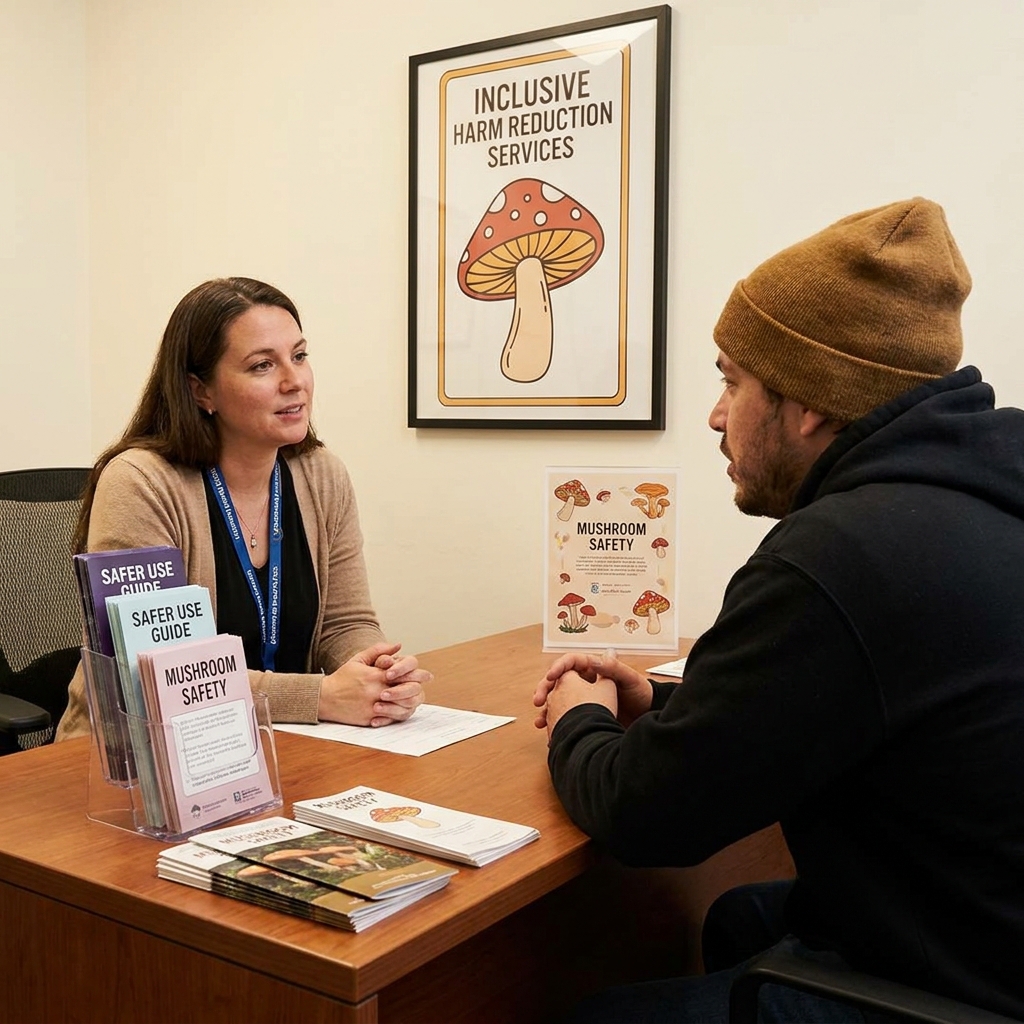
How to Find a Psilocybin Therapist or Guide
Choosing who to work with is the most consequential decision in the psilocybin therapy process. The quality, ethics, and experience of the guide or therapist shapes the experience more than almost any other variable. This guide covers what to look for, what questions to ask, and the red flags that should stop you from proceeding.
The Landscape: Who Can Legally Work With You
Oregon — Licensed Psilocybin Facilitators
Oregon's Measure 109 program created the first legal framework for psilocybin facilitation in the US. Licensed facilitators:
- Are certified by the Oregon Health Authority (OHA)
- Must complete an OHA-approved training program (minimum 160 hours)
- Must pass a background check
- Are not required to be licensed mental health professionals
- Must work within a licensed service center — they cannot facilitate sessions at private homes
Verify an Oregon facilitator license: Search the OHA psilocybin facilitator registry at oregon.gov. Any licensed facilitator in good standing will be listed. If they are not in the registry, they are not licensed.
Colorado — Licensed Healing Center Facilitators
Colorado's Proposition 122 created a healing center framework that allows:
- Licensed healing centers staffed by certified facilitators
- Facilitators who are also licensed mental health professionals (therapists, psychologists) to integrate psilocybin with psychotherapy
- Sessions at licensed centers or, with approval, at private residences
Verify a Colorado facilitator: Search the DORA (Department of Regulatory Agencies) healing center registry at dora.colorado.gov.
Integration Therapists (All States)
Integration therapists are licensed mental health professionals who support psilocybin experiences without administering the compound. They help people prepare for and process psilocybin experiences in states where facilitation is not legal.
They operate within standard therapy confidentiality protections. They cannot attend your session, but they can provide preparation, harm reduction guidance, and post-session integration support.
Underground Guides
Many experienced guides work outside of legal frameworks in states without programs. Underground facilitation carries legal risk for both the guide and the client. Assessing competence and ethics is harder without licensing structures.
If considering an underground guide, reputation within trusted community networks, personal references from people you trust, and willingness to meet and answer questions thoroughly before committing are the primary vetting tools available to you.
How to Search
In Oregon and Colorado
- OHA registry (Oregon): oregon.gov — search licensed psilocybin facilitators by name or location
- DORA registry (Colorado): dora.colorado.gov — search licensed healing centers
- LearnShrooms Directory: Our directory lists vetted service centers in Oregon and Colorado with provider notes
- Healing Advocacy Fund: maintains a referral network of licensed Oregon and Colorado providers
- Heroic Hearts Project: specifically for veterans and first responders — maintains a vetted provider network
For Integration Therapists
- Psychology Today: psychologytoday.com — filter by "psychedelic integration" specialty
- MAPS therapist directory: maps.org — lists MAPS-trained therapists
- Fluence: fluence.network — lists Fluence-trained integration therapists
- Psychedelic Support: psychedelic.support — therapist directory with integration specialty filter
What to Look For
Training and Credentials
In Oregon and Colorado: OHA or DORA licensing is the baseline. Ask specifically:
- Where did you complete your facilitator training?
- How long have you been licensed?
- How many sessions have you facilitated?
For integration therapists: Active state licensure (LCSW, MFT, LPC, PhD, PsyD) plus specific psychedelic integration training. Ask:
- Have you completed any formal psychedelic integration training?
- Have you personally experienced psilocybin? (Not required, but relevant context)
- How many integration clients have you worked with?
For underground guides: Training is unverifiable, so references and track record matter more. Ask for two or three references from past clients — and follow up on them.
Relevant Experience
Generic facilitation training covers the basics. For specific populations or presentations, relevant experience matters:
- Veterans and first responders: Look for facilitators with military cultural competency, ideally with veteran peers in their support network
- Trauma: Look for trauma-informed training (somatic experiencing, EMDR background, or similar)
- Grief: Some facilitators specialize in end-of-life and bereavement work
- Mental health history: Complex psychiatric histories benefit from facilitators with clinical mental health backgrounds
The Preparation Session
Every ethical facilitator will conduct at least one substantial preparation session before any psilocybin session. This is non-negotiable.
In the preparation session, a good facilitator will:
- Take a thorough medical and psychiatric history
- Screen for contraindications
- Discuss your intentions and what you're hoping to work with
- Explain what the experience typically involves
- Discuss what they will do if things become difficult
- Answer all your questions without rushing
If a facilitator offers to skip or dramatically shorten preparation, walk away.
The Therapeutic Relationship
Trust is the foundation. Before committing, ask yourself:
- Do I feel genuinely heard in our conversations?
- Do I trust this person to hold space for difficult experiences?
- Do I feel pressured or rushed?
- Are they honest about uncertainty and limitations?
- Do they ask more questions than they answer?
A facilitator who has confident answers for everything and never acknowledges uncertainty is a caution sign. Psilocybin therapy involves genuine unknowns, and good practitioners are honest about that.
Questions to Ask Before Booking
About their background:
- What is your training, and where did you complete it?
- Are you licensed, and can I verify that?
- How many sessions have you facilitated?
- What populations do you have the most experience with?
- Have you personally worked with psilocybin?
About the process:
- What does your preparation process involve?
- What happens during the session if I become very distressed?
- What integration support do you offer after the session?
- What is your policy if I need to stop the session?
- Do you work with a co-facilitator or alone?
About logistics and ethics:
- What are your fees, and do you offer sliding scale?
- What is your cancellation policy?
- What is your confidentiality policy?
- Do you have a professional supervisor or peer consultation group?
- Can you provide references from past clients?
Red Flags
These are situations where you should not proceed:
Before booking:
- Resistance to answering questions about training, credentials, or experience
- Pressure to commit quickly or make deposits before a preparation conversation
- Fees payable only in cash or cryptocurrency with no receipts
- Claims of guaranteed outcomes ("this will heal your depression")
- No mention of contraindications screening
- No preparation session offered or preparation described as a brief phone call
During the preparation process:
- Skipping medical/psychiatric history
- Dismissing concerns about medications or health history
- Religious or spiritual pressure — framing the session as requiring you to adopt specific beliefs
- Any suggestion that physical contact beyond a hand on the shoulder or arm is part of the process
- Discouraging you from involving your existing therapist or physician
About the session itself:
- Offering to facilitate sessions alone without a co-facilitator for high doses or first sessions
- Proposing sessions in unusual or isolated locations with no explanation
- Suggesting you keep the session secret from people in your life
Regarding boundaries:
- Any sexual contact or sexualized language is an absolute violation. Report to OHA (Oregon) or DORA (Colorado) immediately.
- Romantic framing or relationship blurring
- Financial pressure beyond standard session fees (special supplements, additional packages, donations to personal causes)
Cost and Financial Assistance
Legal psilocybin sessions in Oregon and Colorado are expensive. Typical costs:
- Oregon service center session: $800–$3,500+ for preparation + session + integration
- Colorado healing center session: Similar range; some centers charge more for licensed therapist facilitators
- Integration therapy: Standard therapy rates ($100–$300/hour depending on location and provider)
Financial assistance resources:
- Heroic Hearts Project: Scholarships for veterans and first responders for Oregon and Colorado sessions
- Give Back Foundation: Financial assistance for veterans and others who cannot afford session costs
- Many Oregon and Colorado service centers offer sliding-scale pricing or veteran/first responder discounts — always ask
- Clinical trials: Free access to psilocybin for qualifying participants; check ClinicalTrials.gov
After You Find Someone
Once you have identified a potential facilitator or therapist:
- Request an initial consultation call (most offer this free or low-cost)
- Come with your questions prepared
- Pay attention to how you feel during the conversation — not just what is said
- Take at least 24–48 hours before committing
- Trust your instincts — if something feels off, it probably is
The right facilitator will make time for your questions without rushing, will be honest about what they don't know, and will leave you feeling genuinely cared for rather than sold to.