Why the Synergy Exists
The neurobiological overlap is instructive. Long-term meditation practice and acute psilocybin administration both suppress activity in the Default Mode Network — the brain network associated with self-referential thought, rumination, and the cons...
Psilocybin and Meditation: Synergies and Integration
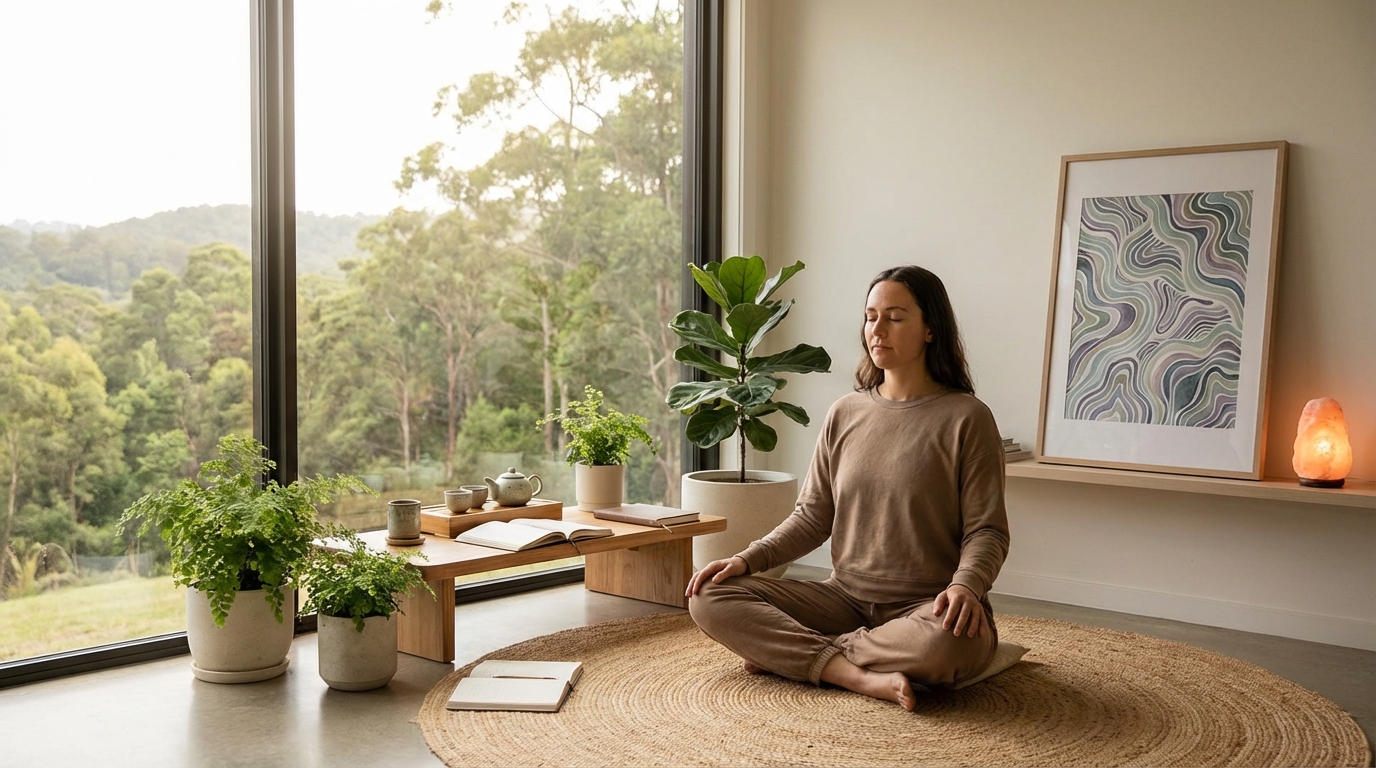
Two of the most studied methods for working with human consciousness — contemplative meditation practice and psilocybin-assisted experience — share deeper commonalities than they might appear to at first glance. Both address the self-referential mental activity that underlies much suffering. Both can produce states of expanded awareness and reduced psychological rigidity. And both, researchers are finding, may be more effective when combined than when practiced in isolation.
Why the Synergy Exists
The neurobiological overlap is instructive. Long-term meditation practice and acute psilocybin administration both suppress activity in the Default Mode Network — the brain network associated with self-referential thought, rumination, and the construction of narrative identity. Experienced meditators show reduced DMN activity at rest and during practice. Psilocybin produces acute DMN suppression that correlates with ego dissolution and with therapeutic outcomes.
Both states also involve increased present-moment awareness, reduced psychological rigidity, and — in their deeper forms — a shift in the relationship between the observing self and the contents of experience. Meditators describe the dissolution of the "watcher" that observes thoughts as a goal of long practice. Psilocybin can produce this same dissolution, sometimes quite abruptly, within a single session.
What Research on Meditation Practitioners Shows
Studies that have included experienced meditators in psilocybin research have yielded consistently interesting findings. Meditators tend to report the psychedelic experience with more equanimity — less anxiety during challenging periods, greater capacity to observe intense experiences without being overwhelmed by them, and more coherent recall of what arose during the session.
Work from Johns Hopkins and from European groups has shown that experienced meditators are more likely to report mystical-type experiences under psilocybin and are better able to engage with those experiences productively. The existing architecture of their attention practice gives them tools — breath awareness, non-reactive observation — that function as stabilizers during acute sessions.
Conversely, meditators report that a psilocybin session can reveal aspects of mind that years of sitting practice had not. The intensity and rapidity of the shift can illuminate habitual patterns of avoidance or identification that are easy to not-notice in gradual meditative deepening.
Meditation as Session Preparation
Even modest meditation practice before a psilocybin session produces measurable benefits. A consistent practice of 10–20 minutes per day for several weeks before a session is associated with reduced anxiety during onset, greater capacity to remain with difficult emotional material that surfaces, and more coherent integration afterward.
The specific practices that appear most useful in preparation are basic breath awareness meditation (training attention to rest with present experience rather than becoming absorbed in thought), and open awareness or "choiceless awareness" practice (learning to witness whatever arises in consciousness without immediately categorizing or fleeing from it).
If you are new to meditation, many guided resources are freely available. The Insight Timer app and UCLA Mindful (free) offer accessible entry points. Consistency over the weeks before a session matters more than session length.
Meditation During a Psilocybin Session
Experienced practitioners often bring their practice directly into the session. Breath awareness serves as an anchor during moments of intensity or confusion — the breath is always present and returning attention to it provides orientation without suppressing the experience.
Body scan practice can help navigate somatic intensity (tingling, energy sensations, physical discomfort) that often accompanies the peak. Rather than tensing against physical sensations, the body scan orientation — moving attention systematically through the body with curiosity — often allows physical intensity to soften.
Some practitioners use the peak as an opportunity for "just sitting" — simply remaining present with whatever arises without attempting to direct, interpret, or hold onto experience. This mirrors the aspirational quality of advanced meditation and is more accessible during psilocybin sessions than in ordinary waking life.
Meditation for Integration
The period following a psilocybin session — days to weeks — often carries a distinctive quality: increased emotional sensitivity, cognitive flexibility, and openness. This window is a critical opportunity for integration, and meditation is one of the most effective tools for working within it.
Loving-kindness meditation (metta) is particularly well-suited to the post-session period. The practice involves systematically generating compassion toward oneself and others, beginning with oneself and gradually expanding outward. Many people find that the emotional openness following psilocybin makes this practice significantly more accessible than usual, and insights about compassion or forgiveness that arose during the session can be anchored and deepened through the practice.
Daily sitting practice during integration also helps maintain the cognitive flexibility opened by the session. Neurobiologically, the post-session window involves increased neuroplasticity; regular meditation during this period may help consolidate beneficial changes and prevent the gradual return to entrenched patterns.
Mindfulness-Based Psilocybin Therapy
Researchers have begun formally integrating mindfulness training into psilocybin therapy protocols. Mindfulness-Based Psilocybin Therapy (MBPT) approaches, being developed at several institutions, combine systematic mindfulness training before a psilocybin session with continued practice during integration. Preliminary evidence suggests this approach may enhance the safety, depth, and durability of therapeutic outcomes compared to psilocybin alone.
The theoretical basis is straightforward: mindfulness training provides the attentional skills and psychological flexibility to make the most of the psilocybin-induced state, and the psilocybin experience can rapidly deepen or transform the practitioner's understanding of what meditation is pointing toward.
Starting a Practice
If you are considering psilocybin-assisted work and have no meditation background, even a few weeks of basic sitting practice will meaningfully support the experience. Start with five minutes of breath awareness daily and build from there. The goal is not to achieve anything specific — it is to develop a basic familiarity with the practice of returning attention to present experience.
Many integration coaches and psilocybin-assisted therapists now include meditation guidance as part of their preparation work. If you are working with a guide or therapist, ask about their approach to contemplative practices in the preparation and integration phases.
This content is educational and does not constitute clinical advice. Consult a qualified professional before making decisions about psilocybin-assisted experiences.