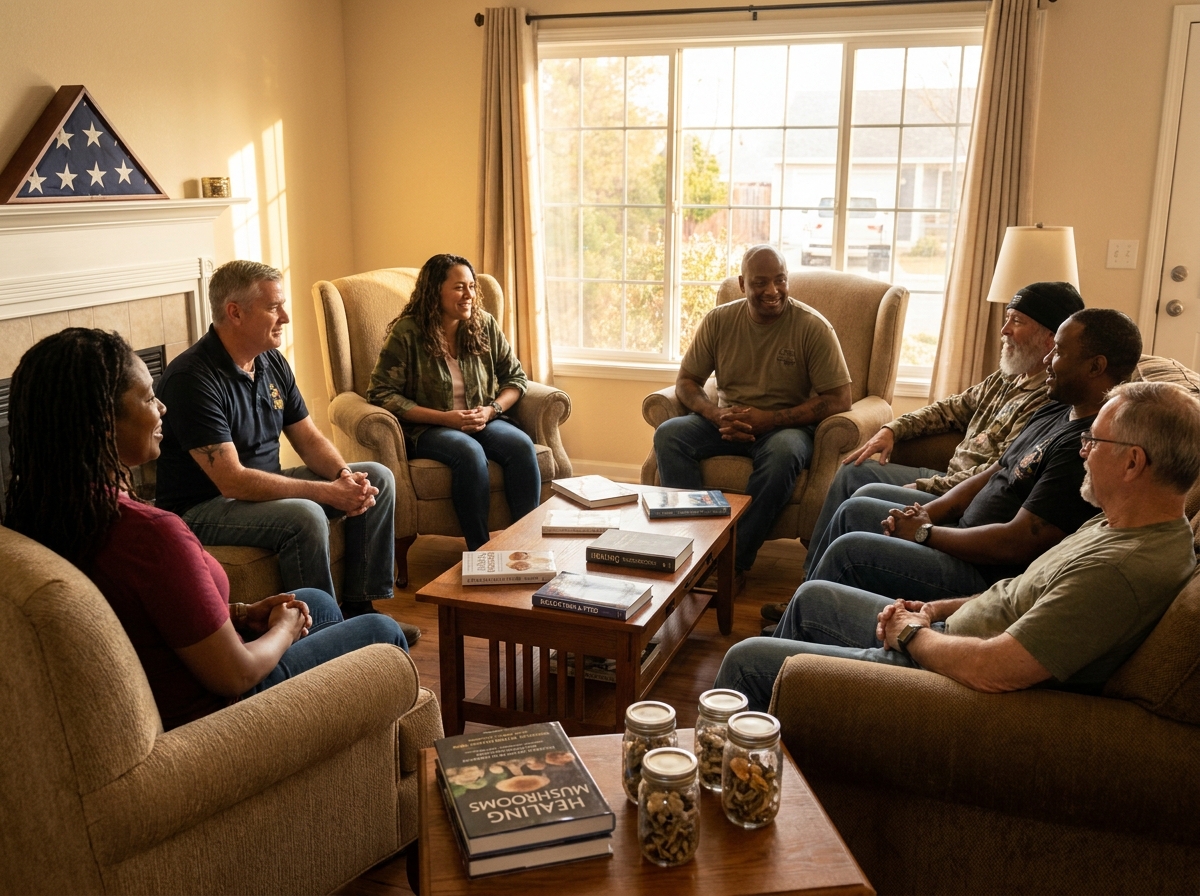
Psilocybin Therapy for First Responders
Resources for firefighters, EMS, and law enforcement exploring psychedelic therapy — stigma, confidentiality, and peer support models.
Psilocybin Therapy for First Responders
Firefighters, paramedics, EMTs, law enforcement officers, and dispatchers face cumulative occupational trauma that conventional mental health systems are poorly equipped to address. PTSD rates among first responders range from 10–20% — comparable to combat veterans — and are likely underreported due to stigma, fear of career consequences, and the culture of toughness that pervades these professions.
Psilocybin therapy is emerging as one of the most promising options for this population, but it comes with specific considerations around confidentiality, employment risk, and the cultural context of seeking help in professions where vulnerability is often professionally penalized.
The Mental Health Crisis in First Responder Communities
The data are stark:
- Firefighters die by suicide at higher rates than in the line of duty
- Law enforcement officers are more likely to die by suicide than in the line of duty
- EMS workers have PTSD rates 2–3 times higher than the general population
- Dispatcher PTSD is often invisible — these workers absorb second-hand trauma with almost no formal support
The causes are structural as well as psychological. First responders accumulate trauma over years of critical incidents — they do not experience a single defining event but rather a chronic load of deaths, injuries, traumatic scenes, and the bureaucratic frustration of a system that often fails the people they are trying to help. This cumulative model of trauma responds differently to treatment than acute single-incident PTSD.
Moral injury is also significant in this population — the distress that comes from participating in a system that does not always allow you to do what you know is right. Law enforcement officers navigating impossible situations, paramedics who lose patients despite doing everything correctly, firefighters who cannot reach everyone in time.
Why Conventional Treatment Often Falls Short
The structural barriers to mental health treatment in first responder communities are well-documented:
- Stigma — seeking mental health treatment is often perceived as weakness, career-limiting, or disqualifying
- Confidentiality fears — many first responders do not trust that therapy records are truly confidential, particularly regarding fitness-for-duty assessments
- Talk therapy limitations — for somatic, hypervigilance-based trauma, verbal processing therapies have limited efficacy; the body holds the trauma in ways that words don't reach
- Medication side effects — SSRIs are the standard prescription, but sedation, emotional blunting, and impaired performance are unacceptable for professionals who carry weapons or operate emergency vehicles
Psilocybin therapy addresses several of these barriers directly. It is a time-limited intervention (not ongoing medication). When accessed outside of the employer's healthcare system, it carries minimal confidentiality risk. And its mechanism — working through embodied, non-verbal processing — may be better suited to somatic trauma than talk therapy alone.
Confidentiality and Employment Considerations
This is the most important practical concern for first responders, and it deserves an honest answer.
Using psilocybin carries legal risk in most states. Even where cities have decriminalized personal possession, psilocybin remains federally illegal and is a Schedule I controlled substance in most states. First responders with security clearances, federal employment, or employer drug testing programs face real career risk if use is discovered.
Practical harm reduction:
- In Oregon and Colorado, access through a licensed service center involves no possession of psilocybin — you attend a session at a licensed facility. The psilocybin is administered on-site and you leave without any substance. This is the lowest legal-risk pathway.
- Legal session records at licensed facilities are not part of your employer's healthcare system and are not subject to fitness-for-duty disclosure unless you disclose them yourself or a legal proceeding compels it.
- Integration therapists — licensed mental health professionals who support your processing of the experience — have the same confidentiality protections as any mental health provider. They are not required to report psilocybin use to your employer.
- Do not use psilocybin within any window where you may be drug tested. Psilocybin itself clears the system quickly, but some metabolites can be detectable for several days.
Peer support programs offer another layer of protection — many first responder communities have peer support networks where confidential discussion of mental health approaches, including psychedelic therapy, is explicitly protected.
Organizations Serving First Responders
First Responder Support Network (FRSN)
Provides residential retreats and peer support for first responders experiencing PTSD, depression, and cumulative stress. FRSN is based in California and runs programs specifically designed for the first responder culture and trauma profile.
Heroic Hearts Project
Primarily veteran-focused but has expanded programming for first responders. Can facilitate legal Oregon and Colorado session access and connect clients with peers who share a first responder background.
Shield616
Faith-based organization providing mental health resources and retreat programs for law enforcement officers. Not psychedelic-specific but provides a trusted entry point for officers who might not approach secular mental health resources.
Safe Call Now
A 24/7 confidential crisis referral service for public safety employees and their families. Staffed by former and current law enforcement, firefighters, and EMS professionals. Can provide referrals to providers with first responder experience.
Phone: 1-206-459-3020
Fire/EMS Helpline
National Volunteer Fire Council helpline for fire and EMS personnel: 1-888-731-FIRE (3473). Confidential peer support and crisis referral.
What the Research Shows for First Responders
Dedicated first responder psilocybin trials are in early stages, but data from overlapping populations (combat PTSD, first responder MDMA trials) are informative:
- The 2021 MAPS Phase 3 MDMA trials, which enrolled some first responders, showed 67% of participants no longer met PTSD criteria after treatment versus 32% in the placebo group.
- A 2023 pilot study at UCSF enrolled firefighters and paramedics in a psilocybin trial for occupational PTSD — results have not been fully published but preliminary reports described significant symptom reduction.
- First responder-specific psilocybin trials are being developed at several institutions following the 2026 executive order's expansion of research funding.
For first responders, the non-directive nature of psilocybin therapy is often cited as an advantage. Unlike prolonged exposure therapy (which requires deliberate, repeated engagement with traumatic memories), psilocybin sessions allow the psyche to surface and process material at its own pace. For people accustomed to maintaining control in crisis situations, the invitation to surrender rather than manage is challenging — but often described as the most valuable aspect of the experience.
Accessing Legal Therapy
Oregon service centers are the most accessible legal option for first responders outside of clinical trials. Key considerations:
- No diagnosis required, no insurance billing, no employer involvement
- Several Portland and Eugene area service centers have facilitators with first responder backgrounds or specific training in occupational trauma
- Session costs range from $800–$3,000+; some centers offer discounts for first responders on request
Colorado healing centers offer the additional option of integrating psilocybin sessions with licensed psychotherapy — valuable for first responders who have existing therapeutic relationships or want more clinical structure.
Clinical trials are free but require meeting specific eligibility criteria and are located at specific sites. Visit ClinicalTrials.gov and search "psilocybin" combined with "PTSD" or "occupational stress."
Preparing for a Session
First responders tend to approach psilocybin sessions with a control orientation — the instinct to monitor, assess, and manage the situation. The most consistent piece of guidance from facilitators who work with this population:
The skills that keep you alive at work will work against you in a session. Hypervigilance, emotional suppression, and situational control are adaptive in emergency response and maladaptive in a psilocybin session. The preparation work is largely about recognizing this pattern and practicing letting go of it.
Practical preparation steps:
- Read Set and Setting carefully — preparation is where sessions are won or lost
- Connect with a peer who has been through the process before booking
- Arrange 3–5 days without work obligations following the session
- Identify an integration support person — a therapist, peer, or trusted friend — before the session, not after
- Disclose all medications to your facilitator; be specific about any sleep aids, beta blockers, or SSRIs
Crisis Resources
If you are a first responder in crisis:
- Safe Call Now: 1-206-459-3020 (24/7, confidential, staffed by peers)
- Fire/EMS Helpline: 1-888-731-FIRE
- CopLine: 1-800-267-5463 (law enforcement peer support)
- 988 Suicide & Crisis Lifeline: call or text 988
Psilocybin therapy is not an emergency intervention. Please reach out to peer crisis support before pursuing any psychedelic therapy options if you are in acute distress.